
Tank vs. Tankless Water Heaters: Which One Fits Your Home? A Clear, Practical Guide
Deciding between a traditional storage (tank) water heater and an on-demand (tankless) system starts with the basics: how each one makes hot water and how that matches your household’s habits. This guide lays out the operational differences, energy and cost trade-offs, sizing and maintenance needs, and local installation realities so you can choose with confidence. For homeowners in Grosse Pointe and nearby Macomb, Oakland, and Wayne Counties, Frost & Kretsch Plumbing offers licensed technicians, transparent pricing with no surprises, a 100% satisfaction guarantee, and 24/7 emergency service to support whatever system you pick. If you’re tired of running out of hot water or watching energy bills climb, this article explains how standby loss, flow capacity, and lifecycle costs play a role — and when it’s time to schedule an on-site estimate. We cover clear technical basics, side-by-side efficiency comparisons, practical sizing examples, and local service options to help you weigh tank vs. tankless from a technical, financial, and everyday-living perspective. Keep reading for plain-language checklists, maintenance schedules, and next steps.
What are the main differences between tank and tankless water heaters?
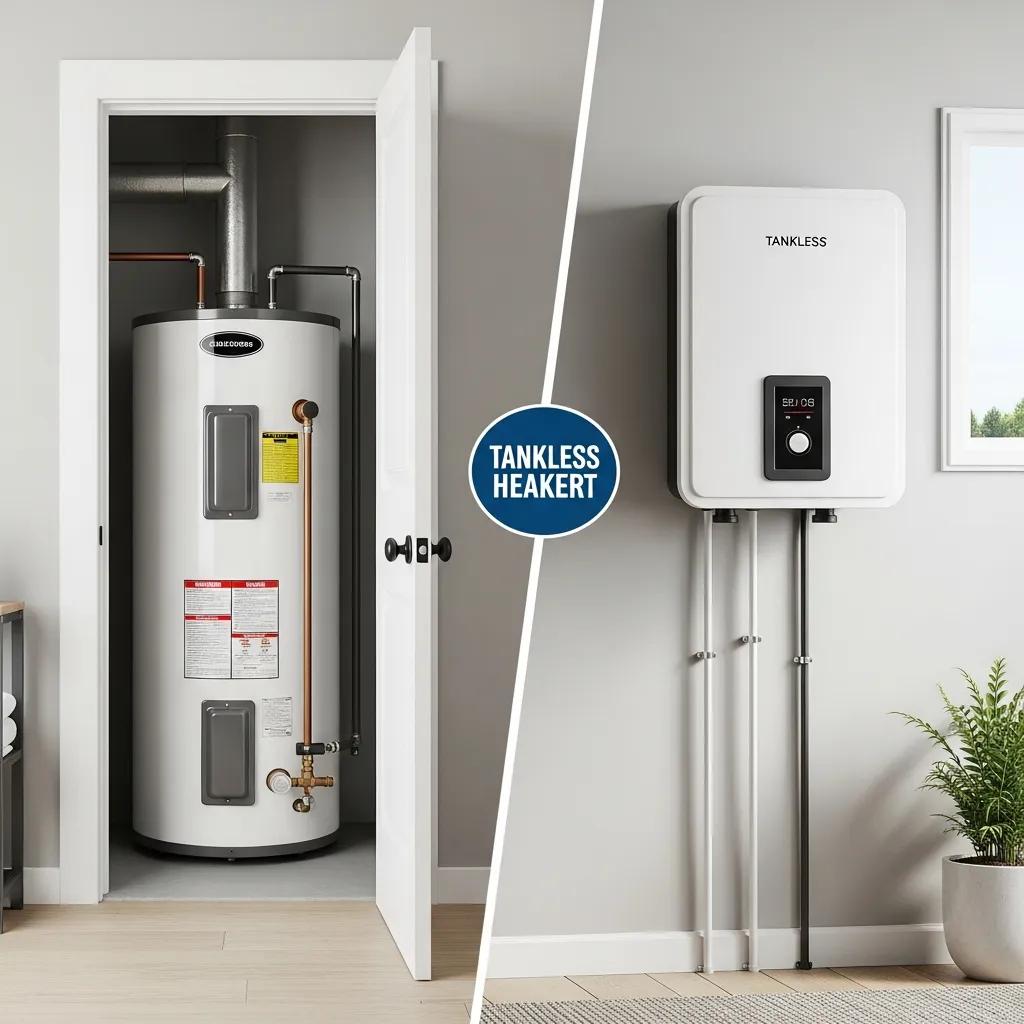
A storage tank water heater keeps a reserve of heated water in an insulated tank. A tankless unit heats water on demand through a heat exchanger. That single difference drives how they perform, how efficient they are, and how you size them. Tanks are measured by first-hour rating (how much hot water they can deliver during peak hour); tankless systems are measured by flow rate (GPM) and how much temperature rise they can deliver. Your choice usually comes down to upfront cost versus lifetime energy savings, available space, and how complex a retrofit will be. Frost & Kretsch Plumbing installs and services both types and can help you evaluate which path fits your home. Understanding these functional differences sets the stage for the rest of this guide, where we break down how each system works and what to expect in real life.
| Feature | Tank (Storage) Water Heater | Tankless (On-Demand) Water Heater |
|---|---|---|
| Primary mechanism | Stores heated water in an insulated tank | Heats water instantly at a heat exchanger as it flows |
| Typical lifespan | 10–15 years | 20+ years |
| Space footprint | Larger (floor or closet-mounted tank) | Smaller (compact, wall-mounted unit) |
| Standby loss | Present (energy used to keep tank hot) | Minimal (no stored hot water) |
| Peak delivery metric | First-hour rating (FHR) | Flow rate (GPM) and temperature rise |
This comparison highlights the practical trade-offs between storage and on-demand designs and leads into a closer look at how each one operates and the pros and cons homeowners usually notice.
How does a storage tank water heater work and what are its drawbacks?
A storage tank water heater heats and holds a set volume of water—usually 30 to 80 gallons—in an insulated cylinder. It uses a gas burner or electric elements and a thermostat to keep the water at your set temperature. That stored volume creates a first-hour rating that predicts peak delivery, but it also causes standby heat loss because the tank must constantly replace lost heat. Over time sediment can settle in the tank and corrosion can form, which reduces efficiency and requires periodic flushing and anode-rod replacement. Without maintenance, performance and life span drop. Typical disadvantages include a limited continuous hot-water supply during very long demand periods, the larger footprint, and higher long-term energy use in many households. These trade-offs are what often push homeowners to consider tankless options — which avoid some issues while introducing others.
- For many homeowners, the tank’s lower upfront cost and simple operation are strong benefits — but they come with routine maintenance needs.
How does a tankless water heater work and what are the benefits?
A tankless water heater turns on a heat exchanger when a tap opens, heating water as it passes through. Flow sensors trigger the burner or electric element only when needed, so you get continuous hot water up to the unit’s rated GPM. Advantages include reduced standby losses, a longer service life, and a smaller footprint that frees up closet or mechanical-room space. Tankless units show the biggest efficiency gains in homes with low-to-moderate hot-water use. They do require careful sizing — you must calculate simultaneous flow demands and the temperature rise needed — and some retrofits need upgraded venting, gas supply, or electrical capacity. In areas with hard water, regular descaling is important to protect the heat exchanger. For large households, planning for multiple units can prevent shortfalls. Understanding these strengths and limits helps you see which homes get the most from on-demand systems versus storage tanks.
How do tankless and storage tank heaters compare on efficiency and cost?
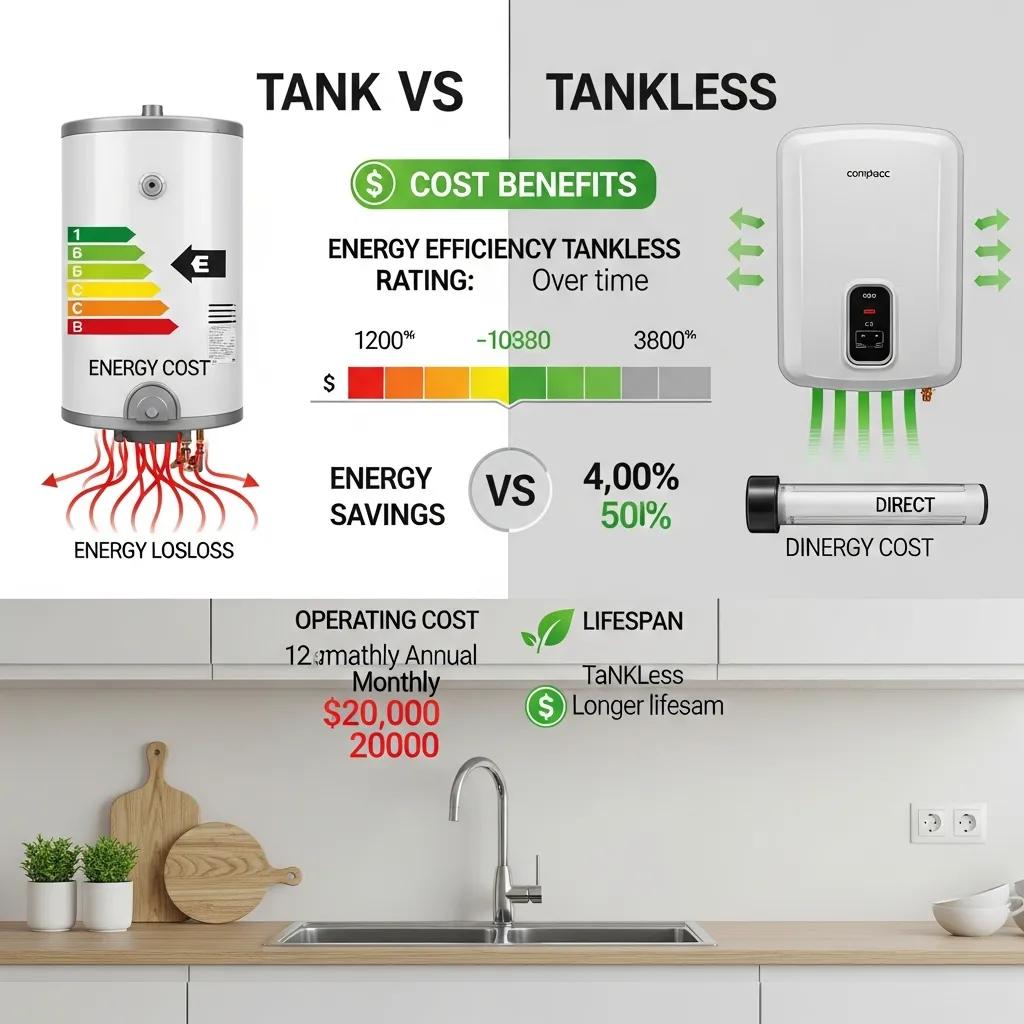
Energy efficiency and lifecycle cost combine operating energy, maintenance, lifespan, and installation price to give total cost of ownership. Tankless units can be about 20–34% more energy-efficient in homes with intermittent hot-water use because they eliminate standby losses. Storage tanks can be more cost-effective in homes with large, frequent peak demands because their first-hour rating meets those peaks without extra cycling. Differences in lifespan and maintenance affect the math: tankless units typically last longer but may need periodic descaling; tanks have predictable tasks like annual flushing and anode replacement. A straightforward numerical comparison and local cost context help homeowners see when a higher upfront cost for tankless pays off over time.
| System Type | Key Metric | Typical Value / Impact |
|---|---|---|
| Tank | Energy efficiency | Moderate; standby losses increase consumption |
| Tankless | Energy efficiency | ~20–34% better in low-to-moderate demand homes |
| Tank | Lifespan | ~10–15 years with maintenance |
| Tankless | Lifespan | ~20+ years with descaling and proper installation |
That snapshot shows how efficiency and longevity influence long-term costs and leads naturally into local installation pricing and example savings calculations.
How much energy could you realistically save switching to tankless?
Tankless models reduce standby losses, the biggest inefficiency in storage heaters, so households with scattered or modest hot-water use can see meaningful fuel savings. Typical real-world savings vary by household, but a family with intermittent hot-water use might see roughly 20–30% lower energy use after switching to a properly sized tankless unit. In very high continuous-demand homes, a large tank can sometimes be more efficient during peak periods because it avoids repeated heat-up cycles. Realized savings depend on your usage pattern, fuel costs, and maintenance — the kind of details an on-site assessment models accurately. For a reliable projection, ask a technician to run a personalized sizing and lifecycle-cost estimate.
- Want a realistic estimate for your home? Our technicians can model annual usage and show a tailored lifecycle comparison.
What are typical installation costs for tankless units in Grosse Pointe?
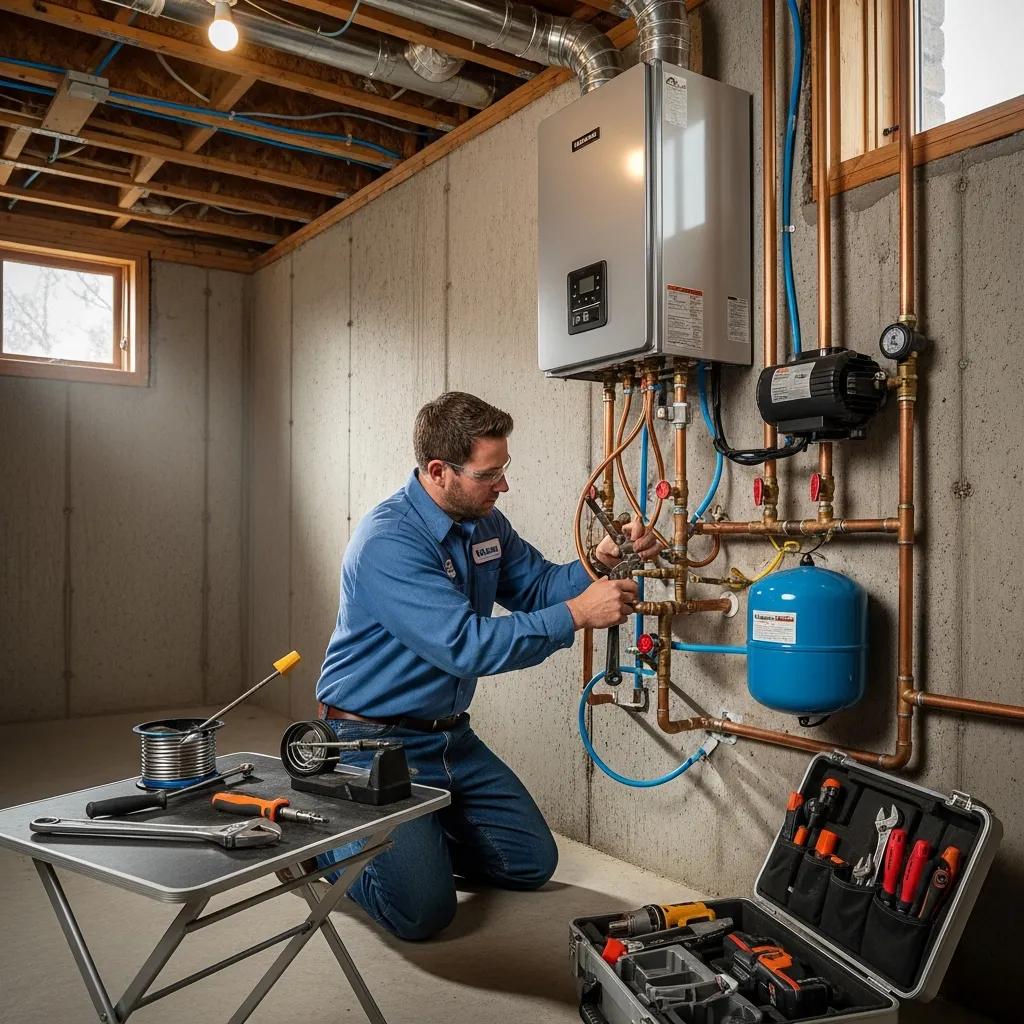
Tankless installation costs depend on unit size, whether it’s gas or electric, venting needs, gas-line or electrical upgrades, and how complex the retrofit is. Cost components include the unit price, venting and materials, any fuel or electrical upgrades, permits, and labor. Simple replacements are least expensive when existing venting and supply match the new unit; complicated retrofits that add new venting, condensate management, or larger gas service increase the price. The table below gives local ranges so you can set realistic expectations before booking an on-site estimate.
| Cost Component | What It Covers | Typical Local Range |
|---|---|---|
| Unit price (tankless) | Equipment cost varies by capacity | $800–$2,500 |
| Venting & materials | Condensing vs. non-condensing venting needs | $200–$1,200 |
| Gas/Electrical upgrades | Line sizing, breaker or panel changes | $300–$1,500 |
| Labor & permits | Installation, testing, local permits | $500–$2,000 |
Because install costs vary, plan for possible upgrades and schedule an on-site visit for an exact quote. Frost & Kretsch provides personalized estimates that model different installation scenarios for your home.
Which factors matter most when choosing between tank and tankless?
Choosing a water heater comes down to household size, peak simultaneous hot-water demand, fuel availability and cost, budget, space and venting limits, and water quality (hardness affects maintenance). These variables change the sizing math — some homes need a higher first-hour rating while others need greater combined GPM capacity — and they help predict whether on-demand or storage will give the best mix of reliability and cost. Practical decision-making combines technical metrics (GPM, BTU, FHR) with lifestyle priorities like continuous hot water for large families or a small footprint for compact homes. The checklist below turns those variables into clear action points you can compare against your home.
- Household size and peak usage: Count simultaneous showers and appliances to calculate required GPM or FHR.
- Fuel availability and cost: Gas usually delivers higher BTU for on-demand units; electric avoids venting but may need panel upgrades.
- Budget and lifecycle view: Balance upfront installation against expected energy and replacement costs over time.
- Space and venting constraints: Small mechanical areas often favor tankless; retrofitting venting adds cost and complexity.
- Water quality: Hard water increases maintenance and may require a softener for tankless longevity.
Use this checklist to match your priorities to the technical needs that determine the right recommendation.
How do household size, demand, and fuel type change the recommendation?
Sizing depends on your household scenario: a couple with intermittent use usually needs lower combined GPM and often benefits from tankless efficiency, while a family with several simultaneous showers and appliances may be better served by a large storage tank or multiple tankless units. Fuel type matters: gas-fired tankless units usually deliver higher continuous BTU output than electric models, so gas is preferred when available and venting is possible; electric tankless models avoid combustion venting but may require significant electrical upgrades to match gas performance. As a rule of thumb, single-couple homes often target 4–6 GPM for a tankless unit; families of four may need a system capable of 8–12 GPM, achieved with a large tank or multiple on-demand units. These sizing rules show when a professional load calculation is essential.
- After sizing, weigh installation complexity against operating cost to choose the option that fits your lifestyle and budget.
What about space, maintenance, and lifespan?
Space: storage tanks need floor or closet room and service access; tankless units mount on a wall and free up floor space, though they still require clearance and proper venting runs.
Maintenance: tanks typically need an annual flush and periodic anode-rod checks to avoid sediment damage. Tankless units need regular descaling in hard-water areas and occasional burner or electrical inspections.
Lifespan: with proper care, tanks usually last about 10–15 years, while tankless units often reach 20+ years — an important factor when comparing long-term value.
Maintenance checklist:
- Annual tank flush to remove sediment and maintain heating efficiency.
- Replace tank anode rod every 3–5 years, depending on water chemistry.
- Descale tankless heat exchanger annually or according to water hardness.
- Inspect venting and gas connections yearly for leaks or wear.
What local services does Frost & Kretsch Plumbing offer for water heaters?
Frost & Kretsch Plumbing handles residential and light-commercial water heater installation, maintenance, and replacements for both tank and tankless systems. We work with trusted brands like Lochinvar and Bradford White and stand behind our work with licensed, insured technicians, transparent pricing, a 100% satisfaction guarantee, and 24/7 emergency service. Our service area covers Grosse Pointe and surrounding Macomb, Oakland, and Wayne Counties. Whether you need a simple replacement or a complex retrofit with venting, gas or electrical upgrades, or multi-unit installations, we offer on-site assessments and personalized estimates that model lifecycle costs and ensure code-compliant, right-sized systems.
Next step: schedule an on-site assessment to confirm sizing, review retrofit needs, and get an itemized estimate that reflects your home’s conditions.
How does Frost & Kretsch ensure quality installations in Grosse Pointe?
We follow a clear installation process: assess hot-water demand and site conditions, provide an upfront estimate listing unit and labor costs, install with proper venting and connections, and complete post-install testing to verify performance and safety. Our upfront-pricing policy and satisfaction guarantee protect you from surprise charges, and our manufacturer partnerships give access to reliable equipment. Technicians complete commissioning tests that confirm temperature rise, flow performance, and pressure-relief operation — and we document each step for your records. This thoroughness lowers the risk of early failure and makes sure the system meets your household’s needs.
- These quality checks are why professional installation pays off when you move from comparison to purchase — and they set the stage for scheduled maintenance.
What maintenance and repair services do we offer for water heaters?
We provide routine maintenance — annual tank flushing, anode-rod inspections and replacements, tankless descaling, burner and element checks — plus diagnostics and repairs for leaks, pressure problems, or component failures. Our 24/7 emergency response covers urgent breakdowns. Recommended care includes yearly attention for tanks and at least annual descaling for tankless units in moderate-to-hard water areas, with extra visits for performance issues like fluctuating temperatures or reduced flow. For convenience, we can set up recurring maintenance plans to protect warranties and extend system life while giving clear documentation and transparent pricing. If a repair is needed, we diagnose the root cause and present repair-or-replace guidance based on age, cost, and expected remaining life.
- Regular maintenance by licensed technicians extends equipment life and preserves efficiency — a smart way to protect your investment.
Frequently Asked Questions
1. What are the environmental impacts of tank vs. tankless water heaters?
Tankless heaters are often greener because they avoid standby losses and only heat water when needed, which can lower overall energy use. Traditional tanks run continuously to keep water hot, which increases energy consumption and related emissions. That said, the environmental footprint also depends on your energy source — an electric unit’s impact varies with how your electricity is generated.
2. How do I determine the right size for a tankless water heater?
To size a tankless unit, calculate peak hot-water demand in gallons per minute (GPM) by adding the flow rates of fixtures used at the same time (showers, dishwasher, washing machine). Then determine the required temperature rise (the difference between incoming water temp and the set hot temp). A professional can verify these numbers and recommend a model that meets your needs without under- or over-sizing.
3. Are there rebates or incentives for installing tankless water heaters?
Many utilities and government programs offer rebates or tax incentives for energy-efficient appliances, including some tankless water heaters. These incentives can reduce upfront costs. Check local utility programs, state energy websites, or manufacturer promotions to find available offers before you buy.
4. What maintenance is required for tankless water heaters?
Tankless units need regular descaling to remove mineral buildup, especially in hard-water areas, plus periodic checks of burners, filters, and venting systems. Annual maintenance is common; frequency depends on water hardness. Staying on a maintenance schedule helps prevent costly repairs and keeps the unit efficient.
5. Can I install a tankless water heater myself?
We generally recommend hiring a licensed professional. Tankless installs can involve complex plumbing, venting, gas-line work, or electrical upgrades and must meet local codes. Incorrect installation risks safety, efficiency, and warranty coverage. A pro ensures proper sizing, safe installation, and thorough testing.
6. How do tankless water heaters perform in cold climates?
Tankless units work in cold climates but must overcome lower incoming water temperatures, which reduces flow at a given temperature rise. In very cold areas you may need a higher-capacity unit or multiple units to maintain both flow and temperature. Proper placement and insulation also help performance in winter.
7. What is the average lifespan of a tankless water heater?
Tankless water heaters typically last around 20 years with proper maintenance, compared with about 10–15 years for well-maintained storage tanks. Lifespan varies with water quality, maintenance, and usage. Manufacturer warranties are a good indicator of expected durability.
Can a tankless water heater run out of hot water?
A tankless unit can feel like it “runs out” when simultaneous demand exceeds its rated flow at the needed temperature rise. Multiple showers plus appliances can push total flow beyond a single unit’s capacity, causing lower outlet temperatures. Solutions include installing more capacity (a higher-rated unit or multiple units) or adding a small buffer tank to smooth peaks. Proper system sizing — calculating peak combined flow and required temperature rise — prevents most shortfalls; a qualified technician can model multi-fixture scenarios and recommend the right configuration for larger homes.
- If you expect high concurrent use, an on-site load calculation will show whether one tankless unit will do or if a multi-unit or hybrid setup is better.
Is a tankless water heater worth the investment compared to a storage tank?
Whether tankless is worth it depends on your hot-water use, local fuel costs, and how long you plan to stay in the house. Tankless units cost more up front but often deliver lower operating costs and a longer service life, making sense for moderate-use households and long-term owners. Payback varies — some homeowners recoup the difference over several years, while for others the higher upfront cost isn’t justified if occupancy is short or demand is continuously high. A scenario-based analysis that models annual energy savings, maintenance, and replacement timelines will clarify the trade-off. For precise ROI, request a personalized lifecycle-cost comparison from a licensed pro that factors in local fuel prices and retrofit needs.
- A tailored cost-benefit analysis based on your household’s usage and retrofit complexity gives the clearest answer about whether tankless is the right economic choice.
Pros and Cons Summary:
- Tank Advantages: Lower initial cost for basic units, straightforward installation in many cases, reliable short-term peak delivery.
- Tank Disadvantages: Standby energy losses, larger footprint, shorter typical lifespan without regular maintenance.
- Tankless Advantages: Minimal standby loss, smaller footprint, longer lifespan, potential energy savings over time.
- Tankless Disadvantages: Higher upfront cost, possible retrofit expenses for venting or fuel/electrical upgrades, sensitivity to hard water.
Maintenance Action Steps:
- Schedule annual maintenance: flush storage tanks or descale tankless units to remove mineral buildup.
- Inspect venting and gas/electrical connections yearly for safety and efficiency.
- Keep service records to support warranties and resale value.
- Call licensed technicians for performance issues rather than attempting major DIY repairs.
When to call a pro:
- Professionals provide load calculations, recommend correct sizing, and deliver itemized installation estimates based on local conditions.
- Timely professional intervention prevents small problems from becoming major failures and helps protect warranties.
| Component | Service Purpose | Typical Frequency |
|---|---|---|
| Tank flush | Remove sediment and maintain heat transfer | Annually |
| Anode rod check | Prevent internal corrosion | Every 3–5 years |
| Tankless descaling | Protect heat exchanger from mineral buildup | Annually or per water hardness |
| Venting inspection | Ensure safe combustion and exhaust | Annually |
- Following these intervals preserves efficiency, extends equipment life, and reduces the chance of emergency replacements.
Conclusion
The right water heater affects your home’s comfort, energy use, and long-term costs. Knowing how tank and tankless systems differ helps you make a practical choice that fits your household. When you’re ready for a tailored recommendation and professional installation, contact Frost & Kretsch Plumbing — we’ll assess your home, size the right system, and provide a clear, itemized estimate so you can move forward with confidence.