
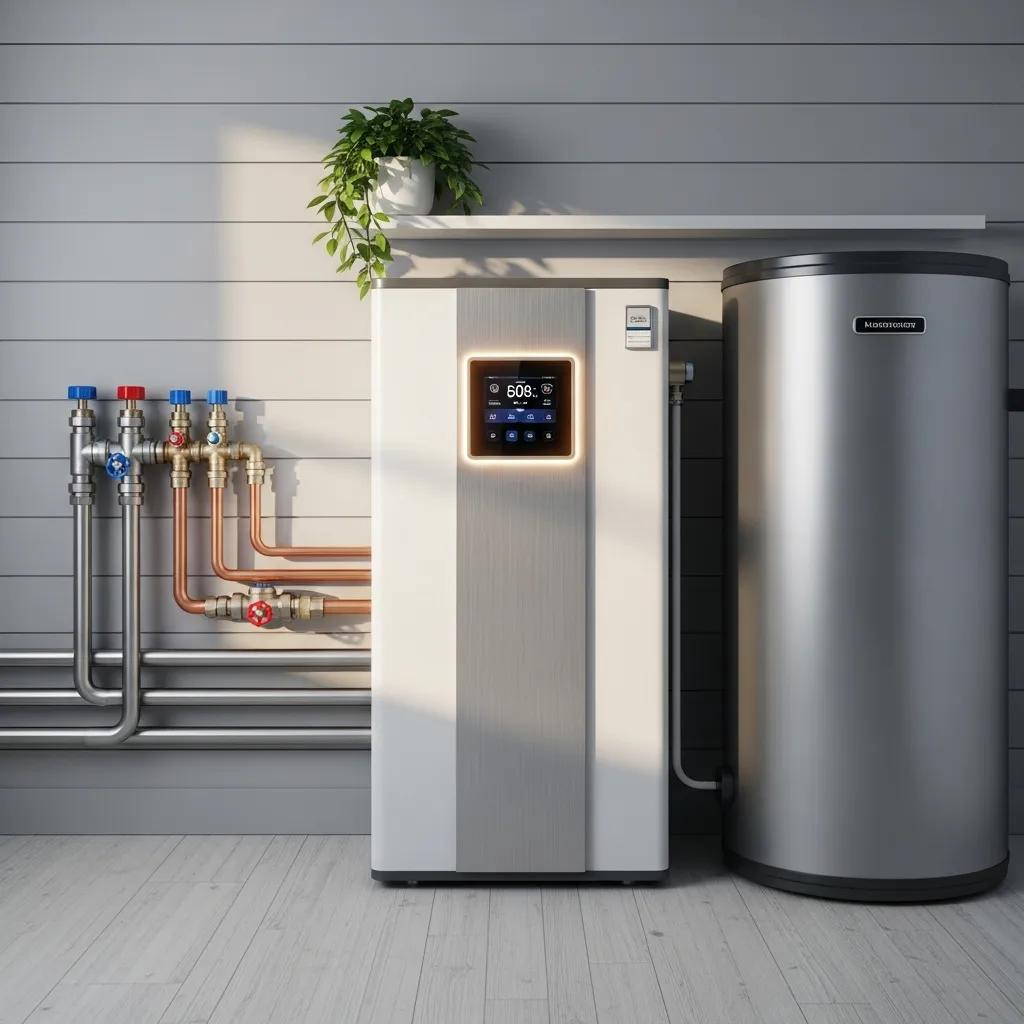
Hybrid Water Heater Installation & Benefits: Smarter, More Efficient Hot Water for Grosse Pointe Homes and Businesses
Hybrid (heat pump) water heaters pair a heat pump with a storage tank and an electric backup element to deliver hot water using far less electricity than older tanks. Below we walk through how these systems work, realistic energy and cost savings for Grosse Pointe homes and small businesses, how hybrids compare to tankless and traditional models, current Michigan incentives, and what a professional installation and service plan looks like. You’ll get a clear picture of the core technology — how ambient heat is moved into your water — plus practical notes on sizing, placement, noise, permitting, and commissioning so you can decide whether a hybrid is the right upgrade for your property.
What is a Hybrid Water Heater and How Does It Work?
A hybrid water heater uses a heat pump to pull heat from the surrounding air and transfer it into water stored in a tank, with an electric resistance element available for peak demand or very cold conditions. The heat pump’s compressor circulates refrigerant: the evaporator collects ambient heat, and the condenser (usually wrapped around the tank) releases that heat into the water. Because the system moves heat instead of creating it directly, a hybrid can be two to three times more efficient than a pure electric resistance heater — metrics like COP (coefficient of performance) and UEF (Uniform Energy Factor) show the real-world gains. That efficiency is why hybrids cut electricity use and operating costs compared with older electric or even some gas systems.
Performance depends on ambient temperature and where the unit is installed, so choosing the right location and correctly sizing the system are key to realizing those savings. Proper sizing balances tank capacity, recovery rate, and your household’s hot-water habits so the electric backup is rarely needed. The sections that follow explain the physics behind the efficiency gains and list the main components you’ll find in a hybrid unit.
How Does Heat Pump Technology Enhance Water Heating Efficiency?
Heat pumps move thermal energy rather than producing it, which is why a heat pump water heater can reach COP values of roughly 2.0–3.5 under good conditions. In plain terms, that means one unit of electricity can deliver two to three-and-a-half units of heat to your water — compared with about a 1.0 COP for a resistance element. UEF ratings summarize appliance test results so you can compare models by likely real-world performance. Because the heat pump relies on ambient air, installers usually suggest placing the unit in a conditioned or semi-conditioned space to keep efficiency steady and avoid unnecessary electric backup use.
Knowing how temperature affects performance leads naturally to the hardware that makes a hybrid reliable. The next section lists those parts and explains why each one matters for maintenance and longevity.
What Are the Key Components of a Hybrid Water Heater?
A hybrid water heater combines several interdependent parts: a heat pump compressor and refrigerant loop, an evaporator and condenser coil, a well-insulated storage tank, an electric resistance element for backup, and a control board that manages modes. The compressor moves refrigerant, the evaporator gathers ambient heat, and the condenser transfers that heat into the tank; the electric element adds heat during peak draws or cold spells. The control board watches temperatures, switches between heat pump and electric modes, and handles defrost cycles when needed. Each component has service implications — compressor health, refrigerant charge checks, and anode rod inspection are routine items in a good maintenance plan.
Understanding these parts makes it easier to spot likely failure modes and routine checks. The next section covers the benefits Grosse Pointe residents commonly see after upgrading.
What Are the Benefits of Hybrid Water Heaters for Grosse Pointe Residents?

Hybrid water heaters offer clear, measurable benefits: much lower operating costs, reduced electricity use, a smaller carbon footprint, and often a longer effective service life compared with standard electric tanks. Because they pull heat from the air, hybrids can dramatically cut the portion of your energy bill spent on water heating — one of the larger loads in a home. Lower energy use means lower annual bills and fewer greenhouse gas emissions tied to grid electricity, a relevant point as the regional grid decarbonizes. For homeowners and business owners focused on savings and sustainability, hybrids are a strong candidate.
Below is a practical comparison of typical benefits and annual-dollar estimates to help local property owners picture likely outcomes for a medium-size household or a small business.
| Benefit | Typical Metric | Estimated Value (example) |
|---|---|---|
| Energy Savings | Annual kWh reduction | ~2,000–3,000 kWh/year |
| Annual Dollar Savings | Household energy cost reduction | Up to $500/year (family of four estimate) |
| Carbon Reduction | Lifetime CO2 saved (approx.) | Tens to hundreds of kg CO2/year |
| Lifespan/Replacement | Expected service life vs electric | Longer effective lifespan, fewer replacements |
That table is a practical snapshot — actual savings depend on your hot-water use, local electricity rates, and the model’s UEF. The paragraphs below unpack dollar savings and environmental impact in plain terms.
Agencies estimate families of four can save as much as roughly $500 per year by switching from an electric resistance tank to a high-efficiency hybrid under typical usage and local rates. Savings rise with higher hot-water demand — larger families or businesses with steady hot-water needs see bigger gains. These numbers assume correct sizing and placement so the heat pump does most of the work rather than relying on electric backup. We’ll look next at how those energy savings translate to lower carbon emissions.
How Much Can You Save on Energy Bills with a Hybrid Water Heater?
Replacing an electric resistance water heater with an efficient hybrid often reduces water-heating electricity use by roughly 50–60%, which can translate to up to about $500 per year for an average family of four under current rates. Your exact savings depend on family size, simultaneous hot-water use, thermostat settings, and local electricity prices — a site-specific assessment gives the best estimate. For businesses, daily demand patterns and duty cycles determine payback and economics.
Example: if an electric tank costs about $700/year to operate, a hybrid that lowers that to $280–$350/year yields roughly $350–$420 in annual savings. That math highlights why correct sizing and location checks during the pre-install assessment matter.
How Do Hybrid Water Heaters Reduce Your Carbon Footprint?
Because hybrids use fewer kilowatt-hours to provide the same hot water, they cut the indirect emissions tied to electricity generation and reduce a household’s carbon footprint over the appliance’s life. The climate benefit scales with your grid’s emissions intensity — cleaner grids mean greater relative benefit — but even on mixed grids, lower kWh use equals meaningful CO2 reductions each year. Over a decade, those annual savings add up to substantial avoided emissions compared with older electric resistance heaters. While lifecycle studies include manufacturing and disposal, operational savings usually dominate the emissions picture.
Seeing the CO2 reduction alongside dollar savings helps many Grosse Pointe property owners decide whether the upfront investment makes sense — next we’ll look at incentives that help lower that upfront cost.
Which Financial Incentives and Rebates Are Available for Hybrid Water Heater Installation?
Federal, state, and utility programs frequently offer incentives for ENERGY STAR-rated heat pump water heaters to lower upfront costs and shorten payback periods. Federally, tax credits and rebate windows have helped offset purchase and installation costs for qualifying units. Many Michigan utilities and state programs also run rebates or point-of-sale discounts — amounts and eligibility vary and change often. Before you buy, check current offers and work with your installer to confirm eligibility and required paperwork.
The table below lists common incentive types, typical providers, estimated values, and quick eligibility notes so you can scan options before budgeting.
| Incentive | Provider (Federal/State/Local) | Typical Value | Eligibility / Notes |
|---|---|---|---|
| Federal Tax Credit | Federal | Up to $1,750 | Qualifying ENERGY STAR units and installation requirements |
| Utility Rebates | Local utilities (e.g., DTE Energy, Consumers Energy) | $100–$1,000+ | Varies by program, income qualifiers may apply |
| State Programs | Michigan/state energy offices | Varies | Program-dependent; subject to funding cycles |
Use this table as a starting point — incentive amounts and availability change, so confirm current figures when planning a purchase.
Frost & Kretsch Plumbing can help you find and apply for qualifying incentives and rebates, estimate your net cost, and handle required documentation. For help with eligibility and accurate pricing, consider scheduling a service visit or requesting a free estimate.
What Federal Tax Credits Apply to Hybrid Water Heater Purchases?
As of mid-2024, qualifying ENERGY STAR heat pump water heaters may be eligible for federal tax credits under the Inflation Reduction Act, most often through the Energy Efficient Home Improvement Credit (Section 25C). The credit can provide up to $2,000 for qualifying heat pump water heaters, but the cap specifically for water heaters is $1,750. Eligibility depends on model certification, installation date, and your tax situation; you’ll typically need product documentation and proof of professional installation. Because tax rules and programs change, verify the latest terms before you buy — your installer or an energy advisor can often confirm qualification and paperwork requirements.
After checking federal incentives, look for local utility and state rebates to stack additional savings, as described in the next subsection.
Are There Local Michigan or Grosse Pointe Rebates for Energy Efficient Water Heaters?
Local rebates in Michigan appear periodically through utilities and state programs and can include instant rebates, point-of-sale discounts, or performance-based incentives tied to verified savings. To find current offers, check utility and state energy pages and ask your installer about program enrollment. Many rebates require installation by a licensed contractor, use of specific certified models, and timely submission of forms, so coordinating with a professional installer simplifies the process. Because funding cycles change, acting quickly helps you secure available rebates.
Frost & Kretsch Plumbing can guide you through typical local rebate steps and prepare the utility paperwork; for hands-on help, schedule a service appointment or request a free estimate.
How Is a Hybrid Water Heater Installed by Frost & Kretsch Plumbing?
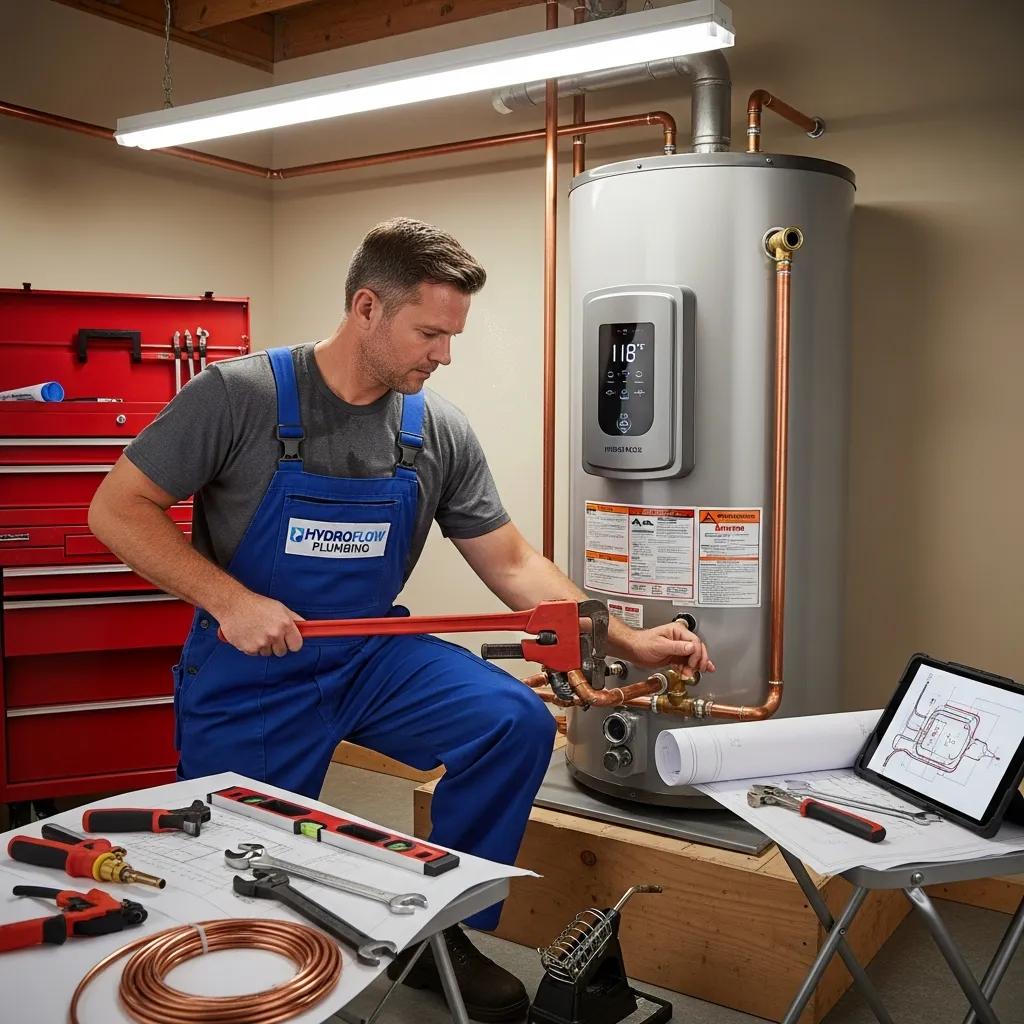
Professional installation starts with a thorough site assessment: we size the unit, check clearances and airflow, confirm electrical capacity, and review venting and drainage to make sure the chosen hybrid will run efficiently and meet code. Technicians evaluate your hot-water patterns, measure the available space for airflow and service access, and confirm whether the electrical panel needs an upgrade. After the pre-install assessment and any required permits, installers remove the old unit, set the new tank, connect plumbing and electrical systems, and ensure refrigerant and compressor connections match manufacturer specs. Commissioning includes startup, mode testing, temperature calibration, and a homeowner walkthrough that explains operation and routine care.
Here’s a practical, step-by-step outline of our usual installation workflow for hybrid water heaters.
- Site Visit & Sizing: We assess peak demand, storage needs, and location constraints in one visit.
- Permits & Prep: We obtain any required permits and prepare the installation area for safe, efficient work.
- Removal & Setup: We remove the old heater, set the hybrid unit, complete plumbing and electrical connections, and verify refrigerant and compressor setup.
- Testing & Commissioning: We test heat pump modes, check controls, and walk you through normal operation and maintenance items.
We finish by documenting warranty registration and demonstrating the unit’s operating modes. For next steps, Frost & Kretsch Plumbing recommends scheduling a professional assessment that aligns with local permits and manufacturer warranty conditions — consider requesting a free estimate to get started.
What Are the Steps for Professional Hybrid Hybrid Water Heater Installation?
A professional installation follows a clear sequence from on-site assessment through commissioning and homeowner education, each stage ensuring code compliance and optimal efficiency. The assessment verifies load profiles and space, permitting clarifies local requirements, and the physical install covers drains, water lines, refrigerant, and electrical work. Commissioning validates heat pump, hybrid, and electric backup modes, performs safety checks, and sets temperatures. Finally, technicians review maintenance intervals, warranty coverage, and simple troubleshooting so you feel confident using the system.
Most installs finish in one to two business days once permits and parts are in place. Proper sequencing reduces callbacks and protects manufacturer warranties, yielding reliable long-term performance.
What Space and Ventilation Requirements Should You Know Before Installation?
Hybrids need clearance for airflow around the evaporator and condenser and usually work best in spaces that stay within a moderate ambient temperature range. We recommend locating units where intake and exhaust air can move freely and where there’s room for service access, while avoiding areas that are excessively cold, hot, or dusty (conditions that hurt efficiency and increase maintenance). Noise is also worth considering — compressors make a low hum, so placing the unit away from bedrooms or living spaces improves comfort. Installers also confirm proper condensate routing and drainage to prevent issues.
Clearing space, confirming electrical access, and ensuring ventilation before the install shortens working time and preserves seasonal efficiency. With the site ready, you can weigh the trade-offs between hybrids and other technologies, explained next.
How Do Hybrid Water Heaters Compare to Tankless and Traditional Models?
Hybrid water heaters sit between tankless and traditional storage tanks: they deliver high operational efficiency while keeping stored hot water on hand for peak demand. Compared with tankless units, hybrids generally offer lower instantaneous flow but better efficiency for steady or staggered demand and are often easier to retrofit to existing tank connections. Against traditional electric or gas tanks, hybrids cut electrical consumption and operating costs while matching or improving reliability. The main trade-offs are higher upfront cost, space and ventilation needs, and different hot-water delivery characteristics — tankless shines with long, continuous draws, while hybrids usually win on overall energy savings for typical household use.
| System Type | Efficiency (UEF/COP) | Lifespan | Typical Upfront Cost | Typical Annual Operating Cost |
|---|---|---|---|---|
| Hybrid (Heat Pump) | UEF high; effective COP 2–3 | 10–15+ years | Higher than basic tank | Lower (significant savings) |
| Tankless (Demand) | High for gas/electric models | 15–20 years | Higher than hybrid in some installs | Variable; efficient for continuous use |
| Traditional Tank (Electric/Gas) | Lower (UEF ~0.9–0.95) | 8–12 years | Lowest upfront | Higher annual cost (electric) |
This comparison explains why hybrids are often the best energy-efficiency choice for households that want lower operating costs while keeping stored hot water for peaks. The sections below dig deeper into efficiency and cost differences.
What Are the Efficiency and Cost Differences Between Hybrid and Tankless Water Heaters?
Hybrids usually show higher UEFs across typical daily cycles because they capture ambient heat and use stored capacity for short peaks. Tankless systems heat on demand and can be very efficient for long, continuous draws, but their performance depends on flow rate and temperature rise and they sometimes require larger gas lines or electrical upgrades. Operating-cost results hinge on usage patterns: families with staggered or frequent hot-water needs often see better lifetime economics with hybrids, while certain commercial or single-point high-flow applications may favor tankless. A site-specific analysis — including fuel type, electricity rates, and expected draw profiles — is the best way to choose.
Installers can model payback periods to help you decide which system fits your needs and budget.
How Do Hybrid Water Heaters Outperform Traditional Electric and Gas Models?
Compared with electric resistance tanks, hybrids dramatically cut electricity use by transferring heat into the water rather than generating it directly, which lowers operating costs and often reduces wear on heating elements. Against gas tanks, hybrids can offer lower lifecycle emissions depending on the electricity mix and may save money depending on local fuel prices and maintenance. Hybrids also tend to reduce the frequency of element replacements and provide strong overall energy efficiency, making them a good fit for homeowners prioritizing sustainability and predictable operating costs. Keep in mind performance drops in very cold, unconditioned spaces and the possibility of needing electrical upgrades during installation.
Knowing these trade-offs helps property owners match system selection to priorities — lowest upfront cost, highest long-term efficiency, or space and noise constraints — and leads into maintenance guidance next.
What Maintenance and Troubleshooting Are Needed for Hybrid Water Heaters?
Routine care keeps a hybrid performing well and extends its life by addressing both tank and heat pump subsystems. Typical maintenance includes periodic tank flushing to remove sediment, inspecting the anode rod to prevent corrosion, cleaning air inlet filters to preserve heat-pump airflow, and having a professional check refrigerant charge and compressor health. Regular service prevents efficiency loss and catches issues like refrigerant leaks or electrical faults early. Setting up a service schedule with a licensed technician helps keep warranties valid and performance steady over the unit’s life.
Below you’ll find a practical maintenance checklist and guidance on when to call a professional so you can protect your investment and avoid unexpected downtime.
What Routine Maintenance Extends the Life of Your Hybrid Water Heater?
Routine tasks — typically yearly or every six months depending on use and manufacturer guidance — include flushing the tank to remove sediment, inspecting and replacing the sacrificial anode rod as needed, and cleaning or replacing the heat pump’s air filters. Watch for unusual noises, check for leaks, and confirm the temperature and pressure relief valve works. Professional service intervals should include refrigerant inspections and electrical checks to spot compressor or control-board issues early. Following a simple schedule and keeping service records supports warranty conditions and improves long-term reliability.
Many homeowners choose a service agreement with a licensed installer to keep these items on schedule and documented.
When Should You Contact a Professional for Hybrid Water Heater Issues?
Call a licensed professional right away for safety-related problems such as persistent leaks, repeated electrical trips, compressor failure, refrigerant odors, or error codes — these require specialized diagnostics and repair. For non-emergency issues like a slight increase in noise, reduced recovery rate, or a dirty filter, contact a technician within days to weeks to prevent bigger problems. Regular professional inspections catch early wear before it disrupts service. Loss of heat or repeated cycling are clear signs to seek prompt professional attention.
Frost & Kretsch Plumbing provides expert installation, maintenance, and troubleshooting and can help with warranty claims, permits, and performance verification. To get help, consider scheduling a service appointment or requesting a free estimate.
Frost & Kretsch Plumbing is ready to help Grosse Pointe residents evaluate options, navigate incentives, perform professional installations, and provide ongoing maintenance — if you’re thinking about an upgrade, we recommend scheduling a service appointment or requesting a free estimate.
Frequently Asked Questions
What is the lifespan of a hybrid water heater compared to traditional models?
Hybrid water heaters typically last about 10 to 15 years, often longer than traditional electric resistance tanks, which commonly run 8 to 12 years. The gentler, more efficient operation of hybrids reduces wear on heating components, which helps extend useful life and can lower long-term replacement costs.
How do I choose the right size hybrid water heater for my home?
Right-sizing a hybrid depends on your household’s hot-water demand: peak usage times, number of occupants, and simultaneous draws. A professional installer will calculate storage capacity and recovery needs based on those factors and your home layout. Proper sizing minimizes electric backup use and maximizes savings and comfort.
Are hybrid water heaters noisy during operation?
Hybrids make some noise, mainly from the heat pump compressor, but most homeowners describe it as a low hum similar to a refrigerator. Installing the unit away from bedrooms and living areas reduces any disturbance. If noise seems louder than expected, it can indicate a service issue that a technician should check.
What are the environmental benefits of switching to a hybrid water heater?
Switching to a hybrid reduces the electricity needed for hot water, lowering the indirect greenhouse gas emissions from power generation and shrinking your home’s carbon footprint. Depending on your grid, hybrids can save tens to hundreds of kilograms of CO2 each year; over the appliance’s life, those savings add up significantly.
What maintenance is required for a hybrid water heater?
Routine maintenance includes flushing the tank, checking and replacing the anode rod as needed, and cleaning or changing air filters for the heat pump. Periodic professional checks should include refrigerant and compressor inspections and electrical system reviews. A maintenance schedule helps preserve efficiency and supports warranty coverage.
Can I install a hybrid water heater myself, or should I hire a professional?
We strongly recommend hiring a licensed professional. Hybrid installation involves electrical work, refrigerant handling, and code compliance — tasks best done by trained technicians. A pro will size the unit correctly, manage permits and inspections, and ensure your warranty stays intact.
Conclusion
Switching to a hybrid water heater can lower energy bills, reduce emissions, and improve overall efficiency for Grosse Pointe homes and businesses. By using heat pump technology, these systems deliver dependable hot water while cutting long-term operating costs. If you want to explore options or check incentives, contact our team for a personalized assessment. Schedule a service appointment or request a free estimate to see what a hybrid system could save you.