Plumbing Terms Every Grosse Pointe Homeowner Should Know
Plumbing can feel like its own language until a drip, clog, or banging pipe forces you to learn the words. This guide turns the jargon into practical information for homeowners: clear definitions, why each part matters, the signs to watch for, and the simple steps you can take before calling for help. You’ll get a straightforward look at supply and drainage systems, common fixture parts in kitchens and baths, water heating and water-quality basics, and the drainage and sewer terms that matter most. Recognizing names like P-trap, main shut-off valve, backflow preventer, T&P valve, and sump pump helps you spot trouble sooner and describe it clearly to a technician. Read on for plain-language explanations, quick diagnostics, and short maintenance checklists that keep plumbing manageable.
Frost & Kretsch Plumbing is a local Grosse Pointe team ready to step in when a job needs a pro. We handle residential and commercial work — emergency repairs, water heater replacement, sump pump installs, drain cleaning, sewer excavation, and more — with licensed, insured technicians and clear estimates. Use this guide to learn the basics, then reach out to a trusted local crew when professional inspection or service is the right next step. The remainder of this article focuses on homeowner education and only mentions services where they naturally belong.
What Are the Basic Plumbing System Components Every Homeowner Should Understand?
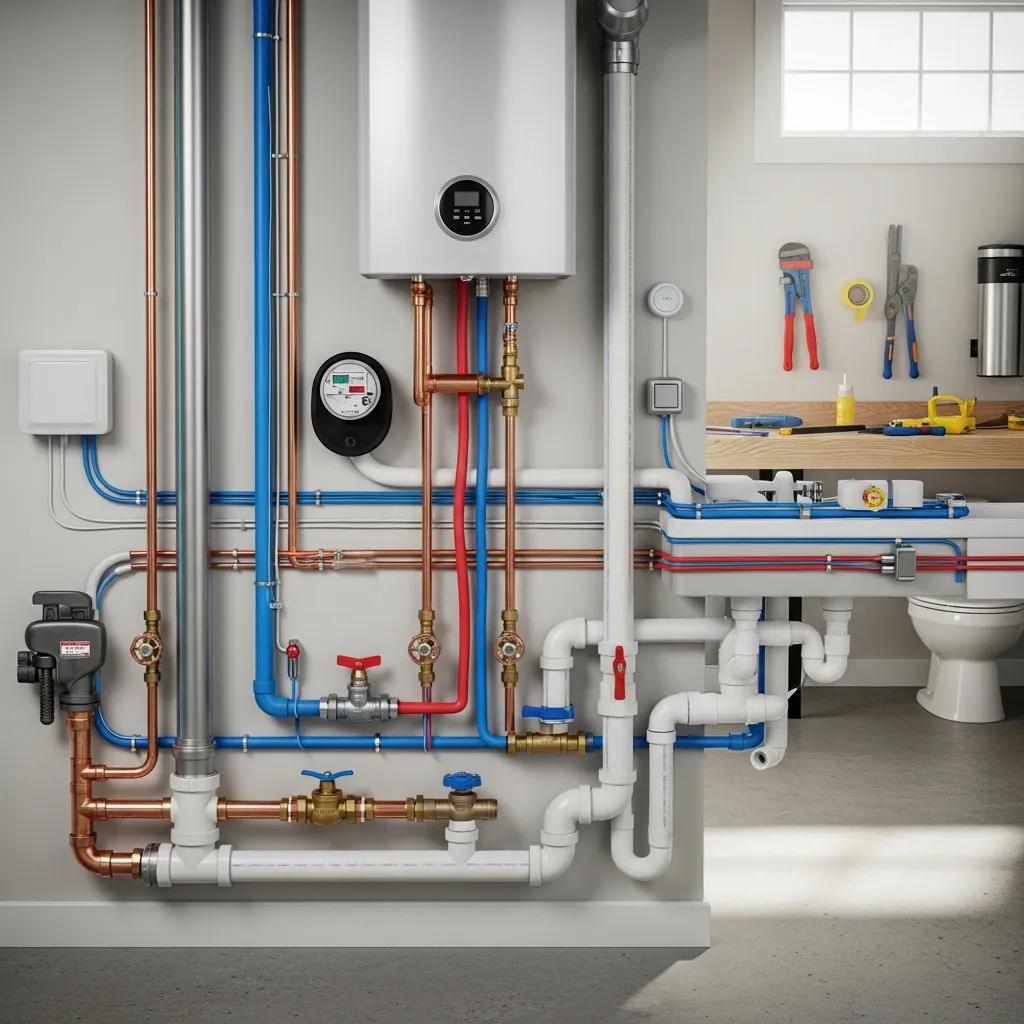
Your home actually has two working plumbing networks: the pressurized supply system that brings clean water in, and the drain-and-vent system that moves wastewater out and keeps sewer gas out of the house. Both rely on pipes, fittings, and valves — supply lines feed fixtures under pressure, while drains use gravity, traps, stacks, and vents to carry waste away. Valves let you isolate sections for repairs. Knowing common materials and valve types helps you spot likely trouble and explain issues when scheduling repairs. The quick table below summarizes common pipe materials, where you’ll find them, and what homeowners should watch for.
Pipes vary by material and perform differently depending on location and local water chemistry.
| Pipe Material | Typical Use | Notes for Homeowners |
|---|---|---|
| Copper | Hot and cold supply lines | Long-lasting and heat-resistant; greenish corrosion can indicate a leak |
| PVC (white) | Drain, waste, and vent (DWV) | Lightweight and inexpensive; not intended for hot supply lines |
| PEX (cross-linked polyethylene) | Supply lines (hot and cold) | Flexible and freeze-resistant; easy to retrofit in remodels |
| Galvanized steel | Older supply piping | Can corrode internally over time and reduce flow |
Being able to identify pipe materials helps you prioritize inspections and predict issues like corrosion or scaling — which leads naturally into the fittings and valves that connect everything.
Which Pipes, Fittings, and Valves Make Up Your Home's Plumbing System?
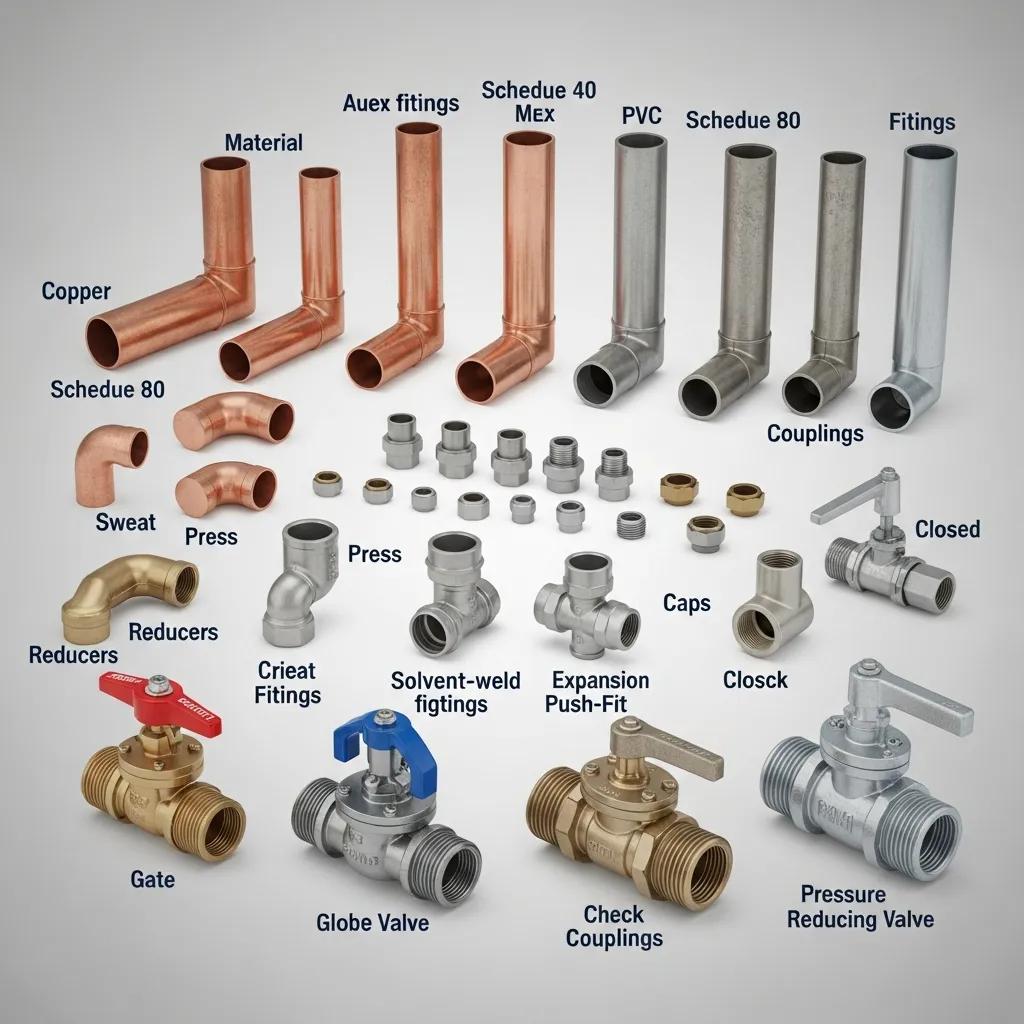
Pipes carry water, fittings change direction or branch lines, and valves control or stop flow. Common fittings include elbows (direction changes), tees (branches), couplings (joins), and unions (removable connections) — places where leaks are more likely. Valves you’ll see around the house include fixture shut-offs, the main shut-off for the whole house, ball valves (quick quarter-turn shut-off), gate valves (older whole-house valves), and check valves (prevent reverse flow). Knowing these parts helps you do basic troubleshooting and isolate a problem before a pro arrives.
Keep a small toolkit handy and know where the nearby shut-off valves are so you can manage small incidents safely. Understanding valve function also helps you see how supply and drain systems interact throughout the home.
Common valve types you may find during a home inspection:
- Ball valve: Quick full shut-off with a quarter-turn handle.
- Gate valve: Uses a rising stem to open or close; common on older mains.
- Check valve: Lets water flow one way to prevent backflow.
- Isolation/shut-off valve: Located at fixtures to isolate a single appliance.
How Does the Water Supply and Drainage System Work Together?
Water arrives under pressure from the street meter or a well, enters through a main line, and branches into smaller supply lines for fixtures. After use, wastewater flows out by gravity through traps, stacks, and vents to the sewer or septic system. P-traps under sinks keep sewer gas out by holding water, while vents equalize pressure so drains clear quickly. Problems often show up where supply and drain systems meet — loose faucet fittings, clogged traps, or blocked vents — producing leaks, smells, or slow drains. Knowing these interactions helps you decide if a fix is a simple DIY or if you need a camera inspection and professional repair.
Understanding supply pressure, trap seals, and venting is important before attempting repairs and leads into the fixture-specific vocabulary that affects everyday maintenance in kitchens and bathrooms.
Signs of supply vs. drainage problems:
- Supply issue: Low pressure or no hot water while other fixtures are unaffected.
- Drainage issue: Slow drains, gurgling vents, or sewer smell at fixtures.
- Combined issue: Repeated leaks at a fixture base may indicate both connection and drainage stress.
How Do Common Bathroom and Kitchen Plumbing Terms Affect Your Home Maintenance?
Knowing fixture parts matters because toilets, faucets, sinks, disposals, and grease traps have specific failure modes and simple homeowner actions that often prevent emergencies. For example, the toilet flapper controls each flush and a clogged aerator affects faucet flow — tasks you can often handle yourself. Garbage disposals need different care (avoid fibrous or starchy scraps) and grease buildup in drains causes recurring clogs. Below are short maintenance lists and a parts comparison to help you prioritize checks and know when to call a pro.
Telling which parts you can service safely and which need a licensed plumber reduces downtime and avoids accidental damage.
| Fixture | Common Parts | Home Action |
|---|---|---|
| Toilet | Flapper, fill valve, flush valve, closet flange | Check flapper and fill valve for leaks; replace flapper if it runs |
| Faucet | Aerator, cartridge, O-ring | Clean aerator periodically; replace cartridge for persistent drips |
| Sink drain | P-trap, tailpiece, slip nuts | Clear clogs at the P-trap; tighten slip nuts to stop minor leaks |
What Are the Key Toilet and Faucet Parts Homeowners Should Know?
A toilet’s flapper seals the flush valve, the fill valve refills the tank, and the flush valve assembly controls the flush; a worn flapper or bad fill valve commonly causes running or weak flushes. Faucets use cartridges, ceramic discs, or compression stems to control flow; aerators at the tip help shape the spray and trap sediment. Simple homeowner steps: shut off the fixture’s local valve before replacing parts, test a toilet flapper with a few drops of food coloring to find leaks, and unscrew the aerator to clean debris. For corroded parts, persistent leaks, or complex repairs, call a licensed plumber to avoid further damage.
Regular checks — testing shut-offs and cleaning aerators — keep minor problems from becoming emergencies and prepare you to handle kitchen devices like disposals safely.
Faucet and toilet maintenance tips:
- Test shut-off valves yearly so they operate when needed.
- Replace worn flappers and O-rings to stop running toilets and drips.
- Clean faucet aerators every 6–12 months to keep flow and spray consistent.
- Use a gentle hand when tightening to avoid cracking plastic parts.
How Do Garbage Disposals and Grease Traps Function in Kitchen Plumbing?
Garbage disposals grind soft food waste with rotating impellers and push the ground material into the drain; jams happen when hard or fibrous items are introduced, and grease can create clogs downstream. Grease traps — common in commercial kitchens but useful to understand at home — capture fats, oils, and grease before they enter drainage lines and cause blockages. Best practices: never pour grease down the sink, avoid coffee grounds and eggshells in the disposal, run cold water while the disposal runs, and call for professional cleaning if odors or slow flow persist. If a disposal keeps jamming or grease keeps clogging drains, professional drain cleaning or trap servicing is the next step.
Simple prevention in the kitchen reduces long-term stress on drains and sewer lines; when prevention fails, professional service restores reliable performance.
Garbage disposal and grease prevention checklist:
- Don’t pour grease down the sink; collect it in a container for disposal.
- Run cold water while using the disposal to help carry waste away.
- Never put bones or fibrous peels into the disposal to avoid jams.
- Schedule drain maintenance if slow draining recurs despite precautions.
What Should Homeowners Know About Water Heating and Quality Terms?
Water heaters come as storage tanks, tankless units, or hybrids, each with parts like anode rods, T&P (temperature and pressure) valves, dip tubes, thermostats, and heating elements or burners that affect safety and performance. Water quality terms — hard water versus soft water — describe mineral content and influence scaling inside heaters and on fixtures, which reduces efficiency and shortens appliance life. The table below compares heater types and typical lifespans so you can weigh maintenance versus replacement. Knowing these components and the effects of water quality helps you plan preventive care and decide when a professional upgrade or a water softener makes sense.
Pay special attention to anode rods and T&P valves: failures here can cause leaks, overheating, or unsafe pressure conditions that require professional attention.
| Water Heater Type | Typical Lifespan | Notes for Homeowners |
|---|---|---|
| Storage tank | 8–12 years | Can collect sediment; check the anode rod periodically |
| Tankless | 20+ years | Higher upfront cost but often more efficient and longer-lived |
| Hybrid (heat pump) | 10–15 years | Very efficient in the right space; needs installation planning |
What Are the Essential Water Heater Components and Their Functions?
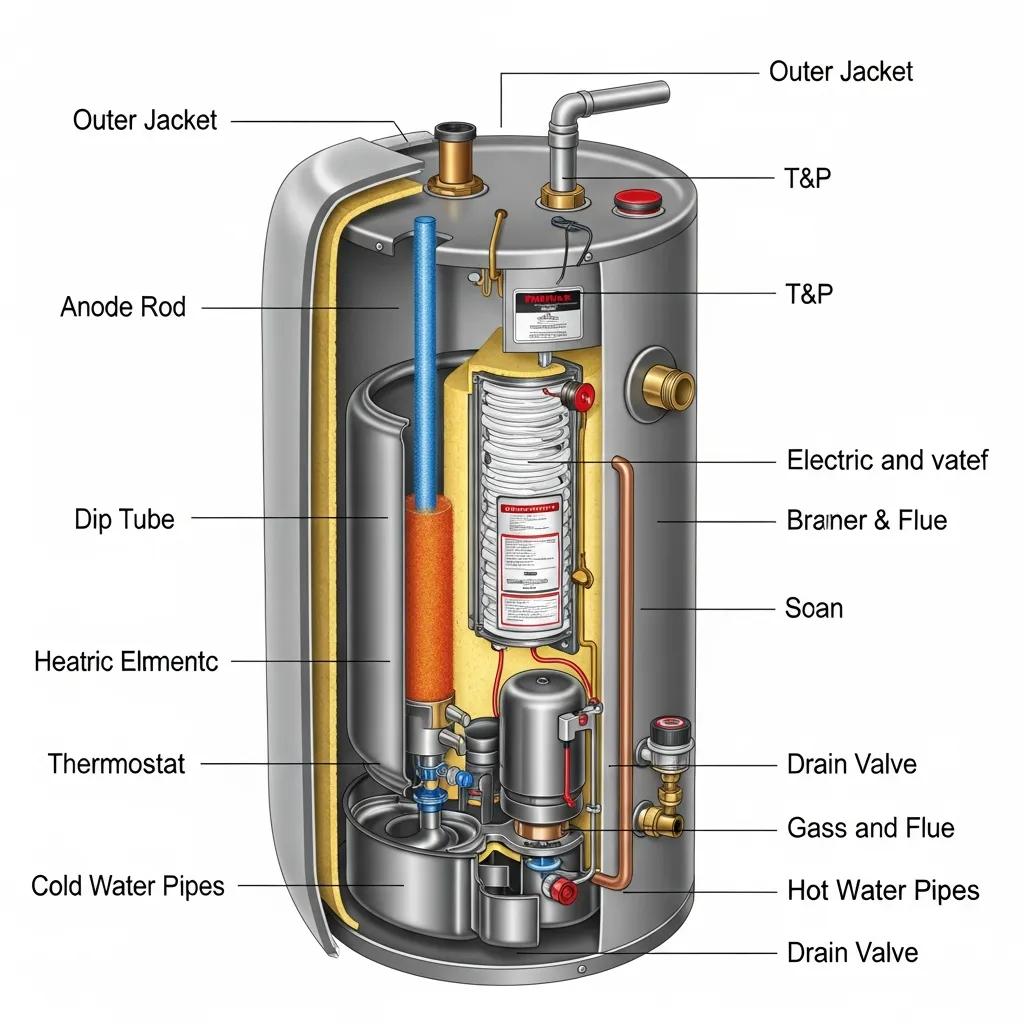
Key water heater parts include the anode rod (sacrificial rod that slows tank corrosion), the T&P valve (safety device that relieves excess pressure or temperature), the dip tube (routes incoming cold water to the tank bottom), and thermostats/elements or burners that control temperature. Inspecting the anode rod and monitoring the T&P valve can extend service life and prevent dangerous conditions. Home checks include listening for rumbling from sediment, scanning for leaks at seams and valves, and testing the T&P valve per the manufacturer’s instructions. Any active leaks, repeated discharges from the T&P valve, or visible corrosion warrant immediate professional inspection. When replacement is needed, a licensed technician can advise on the trade-offs between tank and tankless systems and handle installation safely.
Understanding these parts helps you decide when to call a pro and what to expect from maintenance or replacement.
When to call a professional for water heater issues:
- Persistent leaks at the tank or T&P valve — call right away.
- No hot water or rapid temperature swings — possible element or burner failure.
- Loud rumbling — sediment buildup that needs flushing and inspection.
- Visible corrosion around fittings — begin replacement planning.
How Do Hard Water, Soft Water, and Water Softeners Impact Your Plumbing?
Hard water contains minerals (mainly calcium and magnesium) that leave scale in pipes, on fixtures, and inside water heaters, reducing flow and efficiency. Soft water — produced by water softeners — swaps hardness minerals for sodium or potassium, improving soap performance, reducing scale, and extending appliance life, though it requires space, salt, and regular upkeep. Installing a water softener is often worth it where hardness is high, but you should test water hardness first and consider ongoing maintenance needs. If scale has already caused problems, pairing treatment with targeted plumbing maintenance usually gives the best long-term result.
If hard water has led to repeated appliance issues or visible scale, a professional water test and a combined treatment/maintenance plan will usually deliver the best ROI.
Hard vs. soft water homeowner effects:
- Hard water: More scale, lower heater efficiency, and mineral deposits on fixtures.
- Soft water: Less scale, better soap performance, and longer appliance life.
- Trade-offs: Softeners need space and salt and require periodic maintenance.
- Recommendation: Test hardness before investing in treatment to assess value.
Which Drainage and Sewer System Terms Are Crucial for Homeowners?
Drainage and sewer vocabulary focuses on devices that protect your home — P-traps, backflow preventers, sump pumps, cleanouts — and system components like sewer mains and septic systems. Each term ties to a function that prevents odors, backups, and water intrusion. Understanding how a P-trap blocks sewer gas, how a backflow preventer stops contaminated water from entering potable lines, and how a sump pump clears groundwater helps you prioritize maintenance and respond in an emergency. If you see odors, basement water, or backups, the next steps can include camera inspections, professional drain cleaning, or sump pump service; local companies handle excavation, hydro-jetting, and pump installs when needed.
Knowing these terms helps you schedule preventive checks and know when to call for professional help to avoid costly damage.
| Protective Device | Function | Home Signs of Failure |
|---|---|---|
| P-trap | Holds water to block sewer gas | Persistent odor at a fixture or gurgling sounds |
| Backflow preventer | Stops reverse flow into the potable system | Pressure or contamination concerns after pressure events |
| Sump pump | Removes groundwater from basements | Standing water in the pit or the motor running constantly |
How Do P-Traps, Backflow Preventers, and Sump Pumps Protect Your Home?
P-traps maintain a water seal that keeps sewer gases out; a dry or damaged trap causes odors. Backflow preventers are mechanical devices that stop contaminated water from re-entering your drinking supply and usually need professional testing. Sump pumps gather groundwater and move it away from the foundation; a failed pump during heavy rain can flood a basement. Regular inspections, testing backflow assemblies per local requirements, and maintaining sump pump backups or alarms are practical homeowner tasks — but testing and repairs beyond basic checks are best handled by licensed technicians.
Routine checks and timely professional testing reduce the risk of smells, contamination, and flooding. If problems persist, call a licensed plumber for repairs, testing, or replacement.
Maintenance checklist for protective devices:
- Pour water into P-traps on unused fixtures occasionally to keep the seal.
- Have backflow preventers tested by a licensed technician according to local rules.
- Test sump pumps monthly and keep a backup plan for power outages.
- Inspect the sump pit and float switch for debris that could block operation.
What Are Cleanouts, Sewer Lines, and Septic Systems?
Cleanouts give direct access to sewer lines for snaking or camera inspections and are usually found outside near the foundation or along sewer runs; knowing their location speeds professional clearing and can reduce excavation. Sewer lines vary in material and can fail from root intrusion, corrosion, or offset joints — camera inspection shows the problem and helps decide between cleaning, lining, or replacement. Septic systems need regular pumping, careful drainfield care, and conservative water use; signs of trouble include slow drains, bad smells, and soggy ground over the drainfield. When in doubt, schedule a camera inspection or septic consult to diagnose underground issues before major excavation becomes necessary.
Acting on early warning signs often lowers repair costs and preserves sewer function, while professional drain cleaning and excavation teams can safely handle severe failures.
When to request a camera inspection or excavation:
- Repeated backups after snaking — likely a deeper line problem requiring camera work.
- Sewer odors in multiple areas — suggests a mainline issue, not just one fixture.
- Sinkholes or soggy ground over the drainfield — signs of septic trouble.
- Roots or collapsed pipe shown on camera — may require lining or excavation.
What Are the Most Common Plumbing Problems and Terms Homeowners Should Recognize?
Typical issues include leaks, clogs, burst pipes, and water hammer. Each has recognizable symptoms and immediate actions you should take to limit damage and prepare for repair. Leaks show up as stains, hidden dampness, or changes on your water meter; clogs reveal slow drains or backups; burst pipes can flood an area quickly and need the main shut-off; and water hammer sounds like loud banging when valves close. The table below maps problems to quick homeowner responses and when to call emergency service so you can triage effectively.
Having a clear triage plan reduces water damage, prevents secondary problems, and helps the plumber diagnose and fix the issue more quickly.
| Problem | Common Term(s) | Immediate Action / When to Call a Plumber |
|---|---|---|
| Visible leak | Drip, pinhole, weep | Shut off the local valve; catch water; call a plumber for repair |
| Slow drain/backups | Clog, grease blockage | Try a plunger or auger; call for hydro-jetting if it keeps returning |
| Sudden flooding | Burst pipe | Shut off the main water immediately; call emergency plumbing service |
| Loud banging | Water hammer | Reduce quick-closing valve use; schedule installation of an arrestor |
How Can You Identify and Respond to Leaks, Clogs, and Burst Pipes?
Look for water stains, peeling paint, unexplained humidity, or meter changes when no water is running — these are common leak indicators. For clogs, start with a plunger, clear visible debris from strainers, and use a hand auger for sink traps; if clearing is temporary or issues recur, professional hydro-jetting may be needed. Burst pipes require immediate main shut-off, moving valuables away from water, and calling emergency service — document damage for insurance. If the source is unclear or pipes are hidden, professional leak detection saves time and avoids repeated invasive work.
Quick action — shutting valves, containing water, and seeking professional diagnosis — reduces repair scope and restoration costs.
Immediate homeowner triage steps:
- Find and close the appropriate shut-off valve to stop the flow.
- Contain the leak with buckets and towels to protect floors and belongings.
- Turn off electricity if water contacts outlets or panels to avoid danger.
- Call a licensed plumber for burst pipes, persistent leaks, or if DIY fixes fail.
What Is Water Hammer and When Should You Call a Plumber?
Water hammer is the loud banging or shock in pipes when fast-closing valves abruptly stop water momentum. Over time it can stress joints and cause leaks. Causes include high water pressure, a lack of air cushioning, or unsecured pipe runs. Short-term homeowner steps include briefly turning off supply and opening faucets to release trapped air, checking and tightening visible pipe straps, and watching for recurrence. Persistent or severe water hammer usually requires a professional to install arrestors or air chambers and to check system pressure. If banging continues after basic checks or you see new leaks, schedule a pro to fix it permanently.
Permanent fixes protect your plumbing and restore quiet operation, so don’t ignore ongoing water hammer issues.
Diagnostic and remediation checklist:
- Note when the noise occurs (for example, when a washing machine stops).
- Secure loose pipes and tighten straps to limit movement.
- Test household water pressure; high pressure may need a regulator.
- Hire a plumber to install arrestors or adjust pressure if the problem continues.
Frequently Asked Questions
What should I do if I notice a leak in my plumbing system?
First, shut off the nearest shut-off valve to limit water flow. Contain the leak with towels or buckets to protect floors and belongings. If the source is large, hidden, or you can’t stop it, call a licensed plumber right away and document damage for insurance. Quick action minimizes damage and repair costs.
How can I prevent clogs in my kitchen sink?
Keep grease, coffee grounds, and fibrous or starchy scraps out of the drain and disposal. Run cold water while using the disposal and use a sink strainer to catch solids. Periodic cleaning of the P-trap and occasional baking soda-and-vinegar treatments can help with minor buildup. If clogs return, schedule professional drain cleaning.
What are the signs that my water heater needs maintenance?
Watch for inconsistent hot water, visible leaks around the tank, popping or rumbling noises, or a drop in hot water supply. These signs mean it’s time for a professional inspection. Routine flushing, anode-rod checks, and other maintenance extend a heater’s life and keep it efficient.
How often should I have my plumbing inspected?
We recommend at least an annual inspection to catch leaks, corrosion, or wear before they become major problems. Older homes or properties with past issues may benefit from more frequent checks, and it’s smart to inspect before winter to avoid freeze-related damage.
What is the best way to maintain my sump pump?
Test the pump by pouring water into the pit to ensure it activates and pumps out properly. Keep the pit clean of debris, check the discharge pipe for blockages, and verify any backup battery before heavy storms. Monthly testing during wet seasons is a good habit.
What should I know about backflow preventers?
Backflow preventers protect your drinking water by stopping reverse flow from irrigation systems or cross-connections. They usually require periodic testing and maintenance per local codes. If you have an irrigation system or other cross-connections, have a licensed technician inspect and test the device regularly.
How can I improve my home's water quality?
Start with a water test to check for contaminants and hardness. If hard water is a problem, a softener can reduce scale and extend appliance life. Point-of-use filters improve taste and remove specific impurities. Regular plumbing maintenance — fixing leaks and cleaning fixtures — also helps water quality.
What Are the Basic Plumbing Terms Every Homeowner Asks About?
- P-trap: The U-shaped pipe under fixtures that holds water to block sewer gas.
- Main water shut-off valve: The valve that isolates your home’s plumbing from the municipal supply or well.
- Backflow preventer: A device that stops contaminated water from flowing back into drinking lines.
- T&P valve: The temperature-and-pressure safety valve on water heaters.
- Anode rod: A sacrificial metal rod inside tanks that helps prevent corrosion.
- Sump pump: A pump that removes groundwater from basement pits to prevent flooding.
- Hydro-jetting: A professional method using high-pressure water to clear sewer lines.
- Cleanout: An access point on a sewer line for snaking or inspection.
- Dip tube: The tube inside a water heater that carries incoming cold water to the bottom of the tank.
- Aerator: A screen and flow device on faucet tips that shapes flow and reduces splashing.
Where Is the Main Water Shut-Off Valve and How Does It Work?
The main shut-off is usually near the water meter, in a basement, crawlspace, garage, or on an exterior wall where the main supply enters the house — locations vary by home. Identify the valve type before you need it: turn the wheel clockwise for gate valves until it stops, or flip the quarter-turn handle perpendicular to the flow for ball valves. Close it fully to stop incoming water during major leaks or repairs. Test it now and then by closing and reopening (don’t force a stuck valve). If you can’t operate it or it leaks when used, call a licensed plumber to replace or relocate it so you have a reliable emergency shut-off.
Quick shut-off checklist:
- Locate the valve now and label it for household members.
- Practice closing and opening it gently to confirm it moves freely.
- If it’s stuck or leaks, schedule replacement by a licensed plumber.
- Keep a small wrench or valve key handy for exterior meter valves, if appropriate.
This guide covers the core residential plumbing terms and practical steps homeowners can take to spot, limit, and communicate plumbing issues. If you need inspection, replacement, or emergency service after using this guide, Frost & Kretsch Plumbing — contact Dave Kretsch — can provide prompt local service, transparent estimates, and licensed, insured professionals for jobs from drain cleaning and sump-pump installation to water-heater replacement and sewer excavation.
Conclusion
Knowing the essential plumbing terms gives you the confidence to spot problems earlier, protect your home, and talk clearly with technicians — which saves time and money. Learn the basics here, do the simple checks we suggest, and call Frost & Kretsch Plumbing when you need a trusted local pro. We’re here to help keep your plumbing running smoothly.