Water Hammer: Causes, Effects, and Fixes for Grosse Pointe Properties
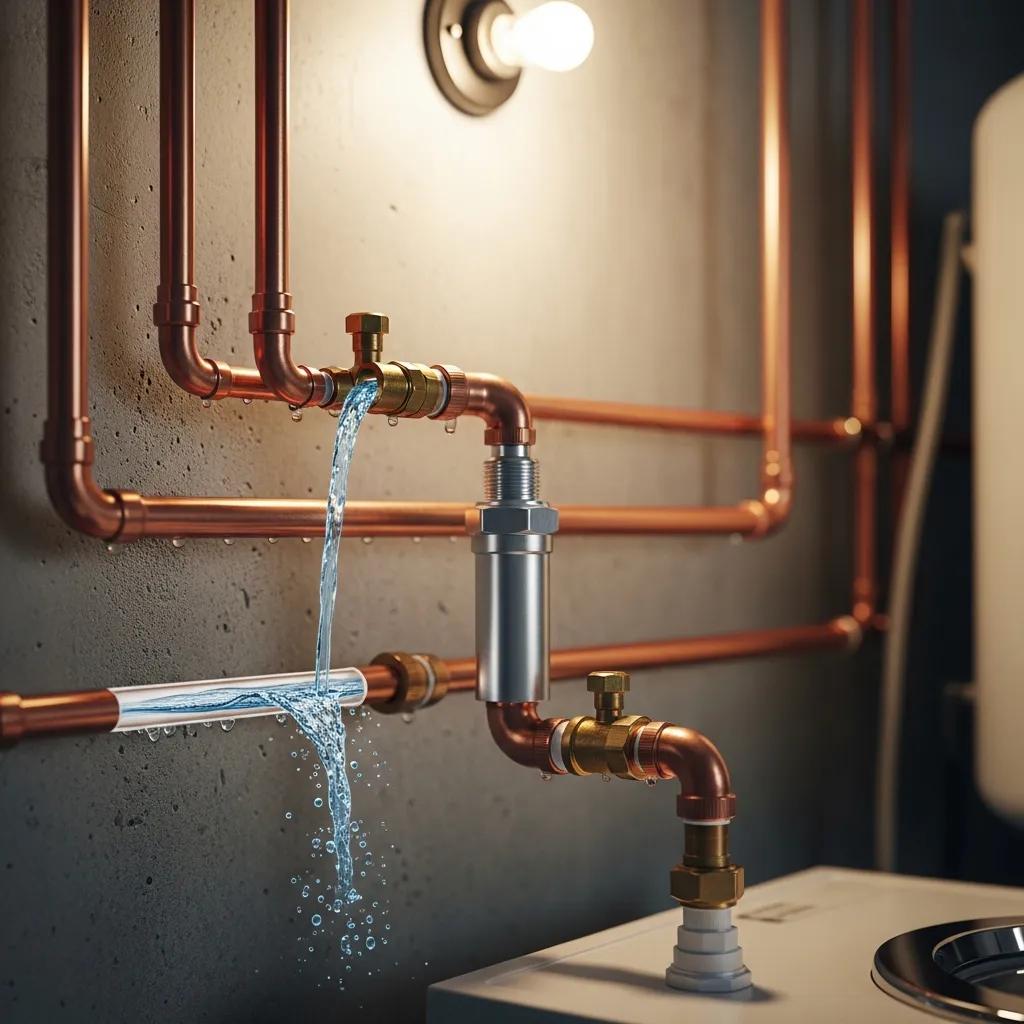
Water hammer is the loud knocking and pressure spike that happens when flowing water suddenly stops or changes direction. That sudden jolt sends shock waves through your pipes, stressing joints, fittings and appliances — and over time it can cause leaks or equipment failure. This guide explains what triggers water hammer, how to recognize it in homes and businesses around Grosse Pointe, the short‑ and long‑term risks, and the practical DIY steps and professional repairs that fix the problem for good. We’ll walk through the mechanics in plain language, show safe diagnostic checks you can do, compare arrestors and pressure controls, and explain when to call a licensed plumber. Follow these steps to quiet your pipes, reduce risk, and restore steady water pressure.
What is Water Hammer and How Does it Affect Your Plumbing?
Water hammer is a rapid spike in pressure that occurs when a moving column of water is forced to stop suddenly. Think of flowing water as energy in motion — when a fast‑closing valve slams shut, that energy has to go somewhere, so it produces a pressure wave that travels through the supply lines. Understanding this helps you choose fixes that address the cause (like arrestors or pressure control) instead of just masking the noise. Knowing how the shock forms also makes it easier to diagnose and prevent recurring problems.
Below is a quick map of common triggers and what they usually produce so you can spot likely trouble spots in your system.
This table summarizes how the hydraulic mechanism creates the immediate effects you hear and feel in your plumbing.
| Component | Typical Trigger | Immediate Effect |
|---|---|---|
| Fast‑closing valve (appliance) | Sudden shut‑off (washing machine/dishwasher) | Local pressure spike and a loud knock |
| High‑pressure supply | Elevated baseline pressure | Stronger shock when flow stops |
| Trapped air / empty chamber | Air pockets compressing | Louder banging and continued oscillation |
| Loose pipe support | Pipe movement during the shock | Rattling, wall vibration, faster wear |
What Causes Water Hammer in Pipes?
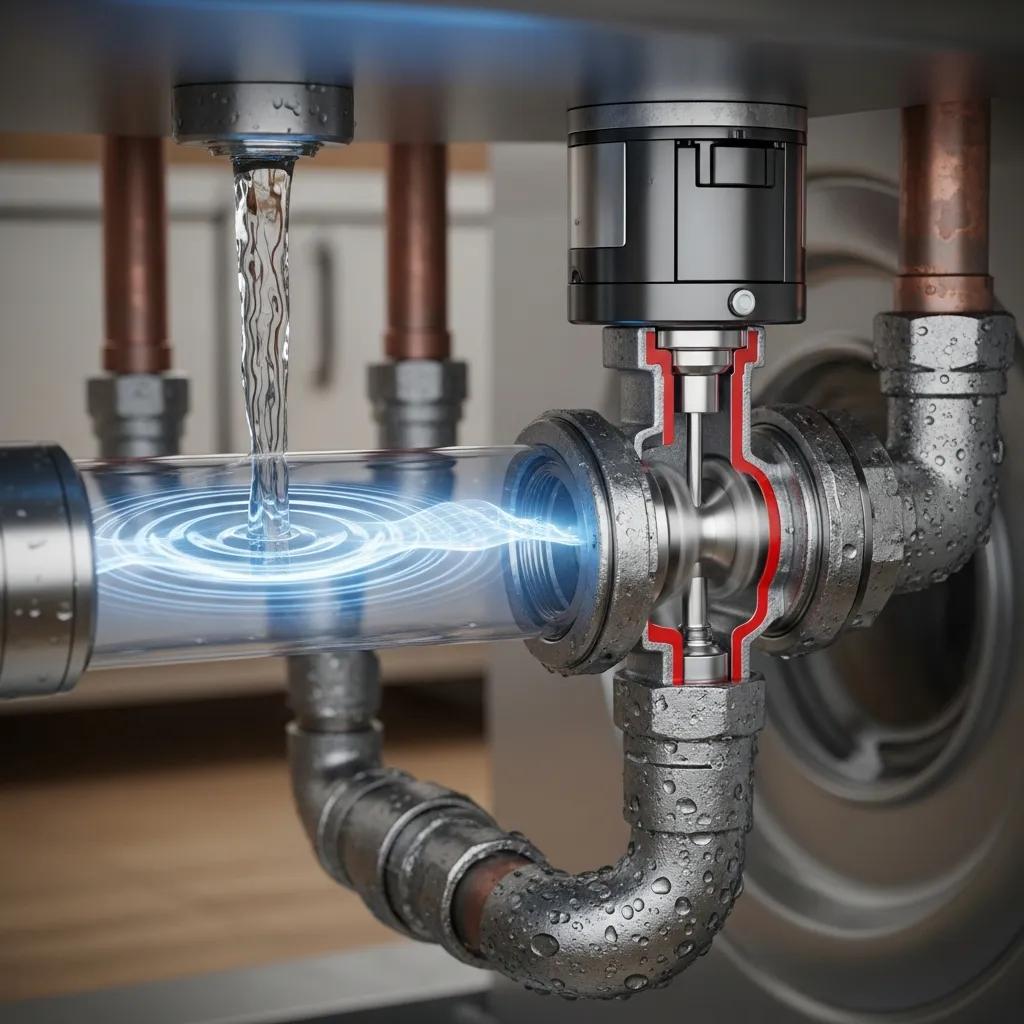
Water hammer usually stems from a few repeatable issues: valves that close very quickly, too much incoming pressure, trapped air in the lines, or piping that’s not secured. Appliances and fixtures with solenoid or quick‑acting valves — like washing machines, dishwashers, and some faucets — shut off much faster than a manual valve, creating a sharp hydraulic shock. High supply pressure makes those shocks more powerful. Trapped air and loose supports don’t create the shock, but they amplify the noise and the movement you hear.
Common causes include:
- Fast‑closing appliance valves: Solenoid valves in washers and dishwashers close nearly instantly and create strong pressure spikes.
- Excessive system pressure: Pressures above recommended household ranges increase shock energy and speed up wear on fittings.
- Loose or unsupported pipes: Unsecured runs move under shock and transmit noise into walls and ceilings.
- Waterlogged air pockets: Air chambers that have filled with water lose their cushioning effect and make banging worse.
How to Identify Symptoms of Water Hammer in Your Home or Business?
Finding water hammer is usually a matter of matching the sound to an action and noting where it comes from. Typical signs are sharp bangs when an appliance cycles, a series of thumps when a faucet shuts, or intermittent rattling in walls or ceilings near supply lines. Use a short checklist to separate water hammer from other noises like pump cycling or cavitation.
Try this homeowner diagnostic checklist:
- Turn off fixtures one at a time to see which action triggers the knock.
- Note whether the noise happens right after a valve closes (likely water hammer) or while water is flowing (could be cavitation).
- Watch visible supply lines during the noise for looseness or movement.
- Check system pressure with a gauge on an outdoor spigot or have a pro measure it.
If the banging lines up with rapid valve closures and you see loose piping or high pressure signs, the next sections show safe DIY fixes and the professional options that stop the underlying shock.
What Are the Damaging Effects of Water Hammer on Plumbing Systems?
Water hammer isn’t just annoying — repeated pressure spikes cause mechanical fatigue that shortens the life of pipes, joints and valves. The pulses stress soldered joints, threaded fittings, elbows and appliance inlets, which over time can loosen seals, crack fittings, or fracture pipes. Fixing the issue early is almost always cheaper than repairing the water damage and replacing ruined components after a leak develops.
The table below links common components to the likely damage and relative severity so you can prioritize repairs.
| Component | Damage Type | Likelihood / Severity |
|---|---|---|
| Pipe joint (soldered) | Loosening, leak formation | High / Moderate‑High |
| Threaded fittings | Seal breakdown, slow leak | Moderate / Moderate |
| Elbows and transitions | Fatigue cracking | Moderate / High |
| Appliance valve / solenoid | Internal wear, failure | High / High |
| Faucet cartridge | Premature wear and drips | Moderate / Moderate |
Can Water Hammer Cause Pipe Damage and Leaks?
Yes. Repeated shocks produce metal fatigue and damaged seals that can progress from tiny stress fractures to visible leaks or burst pipes. Soldered joints may loosen and threaded connections can back out, causing slow leaks behind walls or ceilings that are costly to find and repair. How fast this happens depends on baseline pressure, how often valves close quickly, and the quality of the original installation. Early diagnosis and targeted fixes almost always save money versus repairing water damage later.
Watch for these early warning signs:
- New dripping at joints after you hear banging.
- Stains or discoloration on ceilings or walls near supply runs.
- Noise that gets louder or more frequent over time.
Prompt steps — securing supports, adding arrestors, or replacing suspect fittings — limit damage and help preserve appliance warranties and system life.
How Does Water Hammer Affect Appliances and Fixtures?
Appliances and fixtures with fast valve action take the brunt of water hammer. Washing machine and dishwasher solenoids, faucet cartridges, and water heater inlet fittings wear faster under repeated pressure transients. In water heaters, thermal expansion plus shock pulses can stress inlet/outlet connections and pressure relief components, sometimes causing leaks or tripped safety devices.
Common appliance impacts include:
- Solenoid valve failure in washers and dishwashers, causing leaks or interrupted cycles.
- Faucet cartridge wear that leads to drips and reduced life.
- Leaks at water heater inlet fittings that can corrode tank surrounds or cause downstream damage.
Protecting appliances with arrestors or pressure control reduces service calls and helps preserve warranty coverage. The next section covers DIY options and professional solutions that target appliance‑level risk.
How Can You Fix Water Hammer: DIY and Professional Solutions?
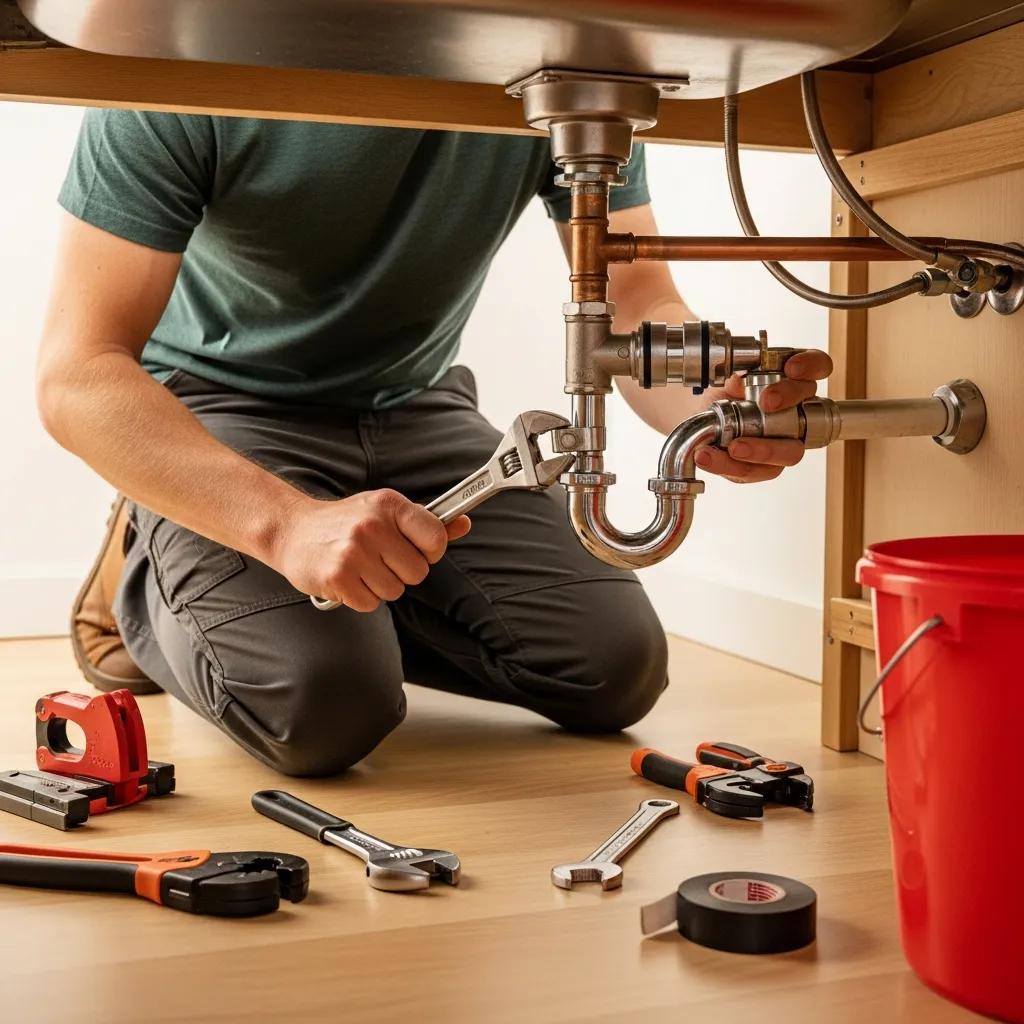
The right repair matches the cause: simple fixes for trapped air and loose piping, and engineered solutions like mechanical arrestors or pressure regulation for systemic issues. Many minor cases respond to DIY work, but professional service gives you correct sizing, code‑compliant installations and diagnostic testing. Below is a homeowner sequence to try first, followed by common professional options so you can decide what’s best for your property.
Start with this safe DIY sequence:
- Find the source using the diagnostic checklist to confirm which fixture triggers the knock.
- Secure loose pipes with straps or hangers placed at the recommended spacing.
- Bleed trapped air by opening the highest and lowest fixtures slowly to let pockets escape.
- Check system pressure with a gauge or call a pro for an accurate reading if you suspect high pressure.
If knocking continues or pressure is high, a professional can install a water hammer arrestor or a pressure‑reducing valve (PRV). The table below compares common professional solutions to help guide that conversation.
| Solution | Characteristic | Typical Use / Pros / Cons |
|---|---|---|
| Mechanical water hammer arrestor | Diaphragm style; compact | Great for point‑of‑use shocks; reliable long term; must be sized correctly |
| Air chamber arrestor | Simple trapped‑air pocket | Low cost; can waterlog over time and lose effectiveness; may be upgraded to mechanical |
| Pressure reducing valve (PRV) | Reduces incoming static pressure | Fixes systemic high pressure; protects whole house; needs proper setup |
| Pipe re‑support and rerouting | Mechanical correction | Stops movement and resonance; permanent but more labor‑intensive |
What Are Effective DIY Methods to Reduce Water Hammer Noise?
Many homeowners can reduce minor water hammer with basic, safe steps. Start by securing visible pipes with proper straps or cushioned hangers. Then purge trapped air by turning off the main, opening the highest and lowest taps, and slowly restoring flow to push pockets out. Temporary vertical air chambers can help but may waterlog; for reliable long‑term performance, mechanical arrestors are a better choice.
Step‑by‑step DIY checklist:
- Turn off the water main if you’re bleeding lines or adding supports.
- Add or tighten pipe straps where pipes pass through joists or along studs.
- Bleed lines by opening taps at the highest and lowest points until flow is steady.
- Re‑test for noise after each change; call a pro if banging continues.
How Does a Water Hammer Arrestor Work and How Is It Installed?
A water hammer arrestor gives the pressure spike somewhere to go. It uses a compressible cushion — either a trapped air pocket or a sealed mechanical chamber with a diaphragm — to absorb shock waves before they reflect down the line. Mechanical arrestors use a diaphragm and internal air cushion for long‑term reliability; simple air chambers can lose effectiveness if they waterlog. Proper installation places arrestors as close as possible to the fast‑closing valve or appliance, sized for the pipe and flow conditions, and installed so they’re accessible for service.
Installation fundamentals:
- Type selection: Prefer mechanical arrestors for lasting performance over old air chambers.
- Location: Mount near the offending valve or appliance inlet.
- Sizing: Match the arrestor’s capacity to the pipe size and expected flow; undersized units won’t help.
If you’d rather have a local expert install arrestors or size a PRV, Frost & Kretsch Plumbing serves Grosse Pointe and nearby communities with licensed, insured technicians. They offer 24/7 emergency response, clear upfront pricing, and a 100 percent satisfaction guarantee. Contact them for an on‑site assessment, recommendation, and professional installation.
When Should You Call a Professional for Water Hammer Repair in Grosse Pointe?
Try the DIY steps first, but call a licensed plumber when banging continues after basic fixes, when you see leaks or water damage, or when system pressure is unknown or suspected to be high. Professionals bring pressure gauges, flow meters and experience to diagnose complex systems and perform code‑compliant PRV or arrestor installations. Bring in a pro sooner for commercial buildings, multi‑unit systems, or when noise coincides with visible stains or appliance problems.
Use this decision checklist to decide whether to call a professional:
- Knocking continues after bleeding lines and securing pipes.
- Any sign of leakage, corrosion, or staining near pipes.
- Frequent shocks affecting multiple fixtures, which suggests systemic pressure issues.
- You need PRV installation, correctly sized arrestors, or work inside walls/ceilings.
If any of these apply, a professional diagnosis prevents escalation and ensures repairs meet local codes and performance expectations. Below is what to expect from a full professional assessment.
What Does a Professional Water Hammer Diagnosis and Repair Include?
A professional visit starts by reproducing the noise and mapping where it originates, then measuring static and dynamic pressures. Technicians may isolate branches, use flow meters to evaluate valve behavior, and inspect fittings and supports. For hidden damage or complicated routes they might use camera inspection or open small access points. After diagnosis, they’ll recommend a repair plan — from arrestor installs and PRV tuning to securing or replacing problem sections — and then verify the fix with post‑repair testing.
Typical professional steps:
- Assessment and reproduction of the noise to identify source zones.
- Pressure and flow measurements to confirm whether high baseline pressure or valve dynamics are the cause.
- Implementation of the chosen remedy (arrestors, PRV, re‑support) with correct sizing and mounting.
- Post‑repair verification including pressure checks and functional tests to confirm the issue is resolved.
How Frost & Kretsch Plumbing Provides Expert Water Hammer Solutions
Frost & Kretsch Plumbing offers local, licensed and insured technicians who combine careful diagnosis with clear pricing and a customer‑first approach to solving water hammer in Grosse Pointe and surrounding Macomb, Oakland and Wayne counties. Their process begins on site to reproduce noises and record pressure readings, moves to a plain‑spoken recommendation — whether arrestors, a PRV or re‑support — and finishes with installation and verification so your system performs quietly and reliably. They provide upfront estimates, emergency response when needed, and back their work with a 100 percent satisfaction guarantee.
Contact Frost & Kretsch Plumbing to schedule an assessment and estimate for the most durable, cost‑effective solution for your property.
What Preventative Measures Can Protect Your Plumbing from Water Hammer?
Long‑term protection is a combination of pressure management, correctly placed arrestors, secure pipe supports and routine checks. A properly set PRV lowers the energy available for shocks, while mechanical arrestors at fast‑closing fixtures absorb remaining transients. Regular inspections keep air chambers and straps working as intended and catch small problems before they grow. These steps reduce emergency repairs and extend the life of fixtures and appliances by cutting down on repeated shock exposure.
The table below summarizes useful preventative steps, what they do, and how often to check them.
| Preventative Measure | Function | Recommended Interval / Note |
|---|---|---|
| PRV installation and calibration | Lowers house static pressure | Inspect annually or after pressure events |
| Mechanical arrestor placement | Absorbs local pressure transients | Inspect at service intervals or if symptoms return |
| Pipe strapping and hangers | Prevents movement and resonance | Check during plumbing service or remodel |
| Routine pressure checks | Detects rising baseline pressure early | Annually or when adding appliances/remodeling |
How to Adjust Water Pressure to Prevent Water Hammer?
Safely adjusting incoming pressure usually means installing or calibrating a Pressure Reducing Valve (PRV) to keep household pressure in a recommended range — commonly 40–60 psi for many homes. If you already have an adjustable PRV, small changes are possible, but calibration affects appliances and must meet local codes, so we recommend a professional adjustment. If pressure checks show values above the target range, installing a PRV gives whole‑house protection that pairs well with point‑of‑use arrestors.
Safe pressure adjustment steps:
- Have a technician measure static pressure at an exterior spigot.
- If pressure is high, install or recalibrate a PRV to the recommended setpoint.
- Retest after installation to confirm stable pressure under normal flows.
Why Is Securing Loose Pipes Important for Water Hammer Prevention?
Loose pipes let hydraulic shock turn into mechanical movement and resonance, which amplifies both the noise and stress on joints and hangers. Securing lines with the right straps or insulated hangers and spacing them correctly reduces deflection and prevents that movement. Inspect supports after renovations or appliance changes so small loosened straps don’t turn into long‑term damage.
Practical securing checklist:
- Use cushioned pipe straps or insulated hangers to avoid metal‑on‑wood contact.
- Space supports according to pipe type (closer spacing for smaller diameter runs and horizontal branches).
- Inspect and tighten supports when banging starts or during routine maintenance.
Securing pipes removes the transmission path for shocks. Paired with arrestors or a PRV, it creates a complete prevention strategy for long‑term protection.
Frequently Asked Questions
What are the long-term consequences of ignoring water hammer issues?
Ignoring water hammer can lead to serious long‑term problems: repeated shocks cause mechanical fatigue that leads to leaks, burst pipes, and damaged appliances. Soldered joints and threaded fittings can loosen over time, creating costly repairs and potential water damage. Addressing water hammer early helps avoid emergency fixes and the expense of replacing damaged finishes and equipment.
Can water hammer affect water quality in my home?
Potentially, yes. Strong pressure surges can disturb sediment and rust in older pipes, which may cause discolored water or particles at the tap. If a pipe is damaged, contaminants have a greater chance of entering the system. Regular maintenance and fixing water hammer reduce those risks and help keep your water clean.
How can I tell if my water hammer is a sign of a bigger plumbing issue?
If water hammer comes with other symptoms — persistent leaks, water stains, frequent appliance failures, or pressure that fluctuates widely — it may indicate a larger issue like systemic high pressure or inadequate pipe support. When multiple fixtures are affected or you see visible damage, it’s wise to call a professional for a full diagnosis.
Are there specific appliances more prone to water hammer?
Yes. Appliances with fast‑closing valves — washing machines, dishwashers and some faucets — are the usual culprits because their solenoid valves shut off almost instantly. Water heaters can also suffer, especially at inlet fittings. Installing arrestors or a PRV at these points helps protect those appliances.
What maintenance practices can help prevent water hammer?
Regular maintenance helps a lot: inspect and secure loose pipes, keep PRVs and arrestors checked, and watch appliances for early signs of wear. Annual pressure checks and addressing any noisy behavior quickly will prevent small issues from becoming big problems.
Is it safe to attempt DIY repairs for water hammer issues?
Some DIY fixes are safe and effective: securing visible pipes, bleeding air from lines, and checking pressure with a gauge. But if the noise continues, if you find leaks or hidden damage, or if you need PRV or arrestor installation in walls or near appliances, call a licensed plumber. Professionals ensure the repair is correct, safe and code‑compliant.
Conclusion
Water hammer is fixable, and catching it early prevents costly damage. Simple steps — securing pipes, bleeding lines, and adding properly sized arrestors — solve many cases. When problems persist or when baseline pressure is high, a licensed plumber can diagnose and install the right long‑term solution. For a quieter, more reliable plumbing system in Grosse Pointe, schedule an assessment with our team and get a clear, practical plan to stop the banging for good.