
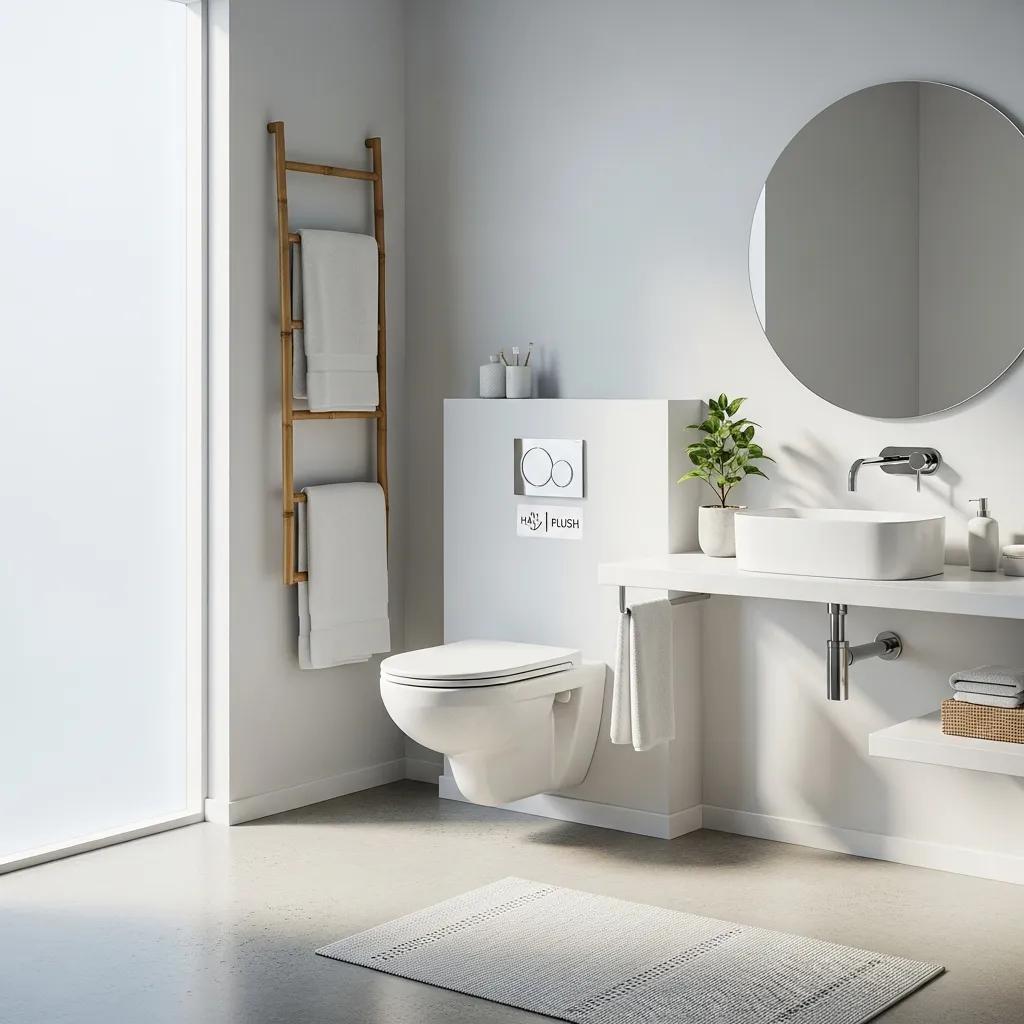
Dual-Flush Toilet Installation and Water Efficiency Benefits in Grosse Pointe
Dual-flush toilets give you two flushing options — a lower-volume flush for liquid waste and a higher-volume flush for solids — so you can save water without sacrificing performance. This guide walks through how dual-flush systems operate, why they usually beat older single-flush toilets, and how picking the right model plus professional installation delivers long-term reliability and savings here in Grosse Pointe. You’ll find clear explanations of GPF and MaP ratings, estimated water and cost savings for a typical household, plus practical repair, maintenance, and selection advice for both homes and businesses. We also cover simple troubleshooting steps you can try before calling a pro and explain the advantages of hiring a licensed plumber. Finally, you’ll learn how local plumbing services help conservation efforts and how to request a free estimate or schedule an installation.
What Are Dual Flush Toilets and How Do They Save Water?
Dual-flush toilets give you two selectable flush volumes — one small flush for liquid waste and a larger flush for solids — so average water used per flush drops. Because most household flushes are for liquids, having a low-volume option cuts total toilet water use compared with older 1.6 GPF single-flush models, which lowers utility bills and eases strain on municipal systems. The real savings depend on correct valve sizing, proper setup, and how people use the fixture, so choosing the right unit and installing it correctly matters. Knowing the internal parts and how they work makes it easier to get reliable, efficient performance day to day.
How Does the Two-Flush System Work?
A two-flush system uses a dual-action actuator that controls a specialized flush valve in the tank. The valve opens partially for a short, low-volume liquid flush and fully for a longer, higher-volume solid flush. Inside the tank you’ll find either a combined dual-flush valve or a split-valve assembly that times and meters the two discharge volumes differently. Press the half-flush button and the valve releases a measured amount of water to clear liquid waste; press the full-flush and the valve remains open longer to move solids. Designs vary — top-mounted buttons, side levers with two positions, or dual levers — but they all follow the same valve-control principle. Proper assembly and calibration of the valve and seals is essential to avoid leaks and keep flushes consistent.
What Makes Dual Flush Toilets More Water Efficient Than Traditional Models?
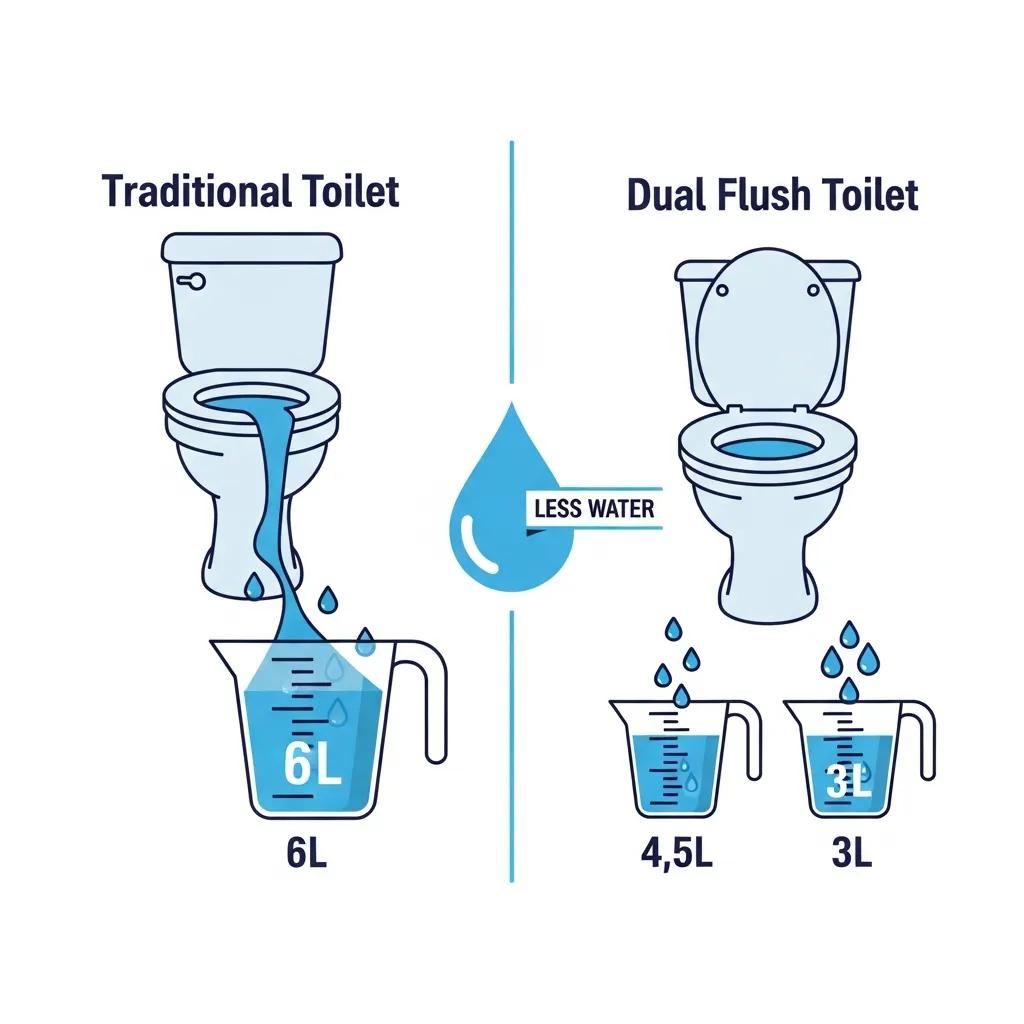
Dual-flush toilets cut unnecessary full-volume flushes by offering a low-volume option typically well below the older 1.6 GPF baseline. Since many daily flushes are liquid waste, a dual-flush routine lowers the household average GPF (gallons per flush) over time. Performance is measured by MaP score and WaterSense certification: higher MaP scores show reliable solids removal at lower volumes, while WaterSense-labeled toilets meet EPA criteria for both performance and water savings. Studies and program estimates show replacing older single-flush toilets with high-efficiency models can produce substantial annual water reductions, though exact savings depend on household size and behavior. Correct installation and homeowner education — so the low-volume flush is used when appropriate and the mechanism is leak-free — maximize the benefit.
What Are the Key Benefits of Installing Dual Flush Toilets?
Dual-flush toilets offer practical and environmental wins: noticeable water savings, smaller water bills, less strain on sewer and treatment systems, and reliable bathroom performance when you pick a quality model. The main gain is reduced water use thanks to selectable flush volumes, which adds up to immediate utility savings and long-term environmental benefit. You’ll also often get modern styling and bowl designs that reduce clogs and increase comfort; many models carry WaterSense labels or high MaP scores that back their performance. For businesses, dual-flush fixtures lower operating costs and show a commitment to sustainability. Understanding likely annual savings and environmental impact helps homeowners and property managers decide which upgrades deliver the best value.
Dual-flush installations typically offer these advantages:
- Reduced Water Use: Matches flush volume to need so you use fewer gallons overall.
- Lower Operating Costs: Cuts monthly water and wastewater bills.
- Improved Waste Handling: Modern trapways and bowl shapes reduce clogs.
These benefits make dual-flush toilets one of the most practical water-efficiency upgrades — next we quantify likely annual savings for a typical household.
Before the table: replacing older single-flush toilets usually yields large water reductions, and picking a high-MaP model helps preserve performance at lower volumes.
| Toilet Type | Characteristic | Estimated Annual Water Savings (family of 4) |
|---|---|---|
| Older 1.6 GPF single-flush | Baseline older model common in many homes | Baseline — reference for savings calculations |
| WaterSense dual-flush (typical) | Low flush ~0.8–1.1 GPF; full flush ~1.28 GPF | 8,000–13,000 gallons/year possible vs older models |
| Ultra-high-efficiency dual-flush | Optimized valves and high MaP | 10,000–13,000+ gallons/year with proper use |
Replacing older toilets with WaterSense or ultra-efficient dual-flush models can save thousands of gallons each year for a family of four. The exact amount depends on household habits and the model you choose.
How Much Water and Money Can Homeowners Save Annually?
A family of four that replaces older single-flush toilets with efficient dual-flush models can cut toilet-related water use by several thousand gallons per year — program estimates often show up to about 13,000 gallons in ideal cases. Dollar savings depend on local water and sewer rates; conservative estimates put household savings around $90–$100 per year in many areas, with higher savings possible if rates are higher or multiple fixtures are replaced. These figures assume typical daily flush counts, consistent use of the low-volume flush for liquids, and properly functioning, leak-free valves. For a precise estimate, factor in your municipal rates and household habits — a quick assessment will narrow the expected savings and help prioritize which fixtures to upgrade.
What Environmental Advantages Do Dual Flush Toilets Offer?
Beyond lower household bills, dual-flush toilets reduce community water demand and the energy used for pumping, treating, and heating water. When neighborhoods or business districts adopt efficient fixtures, peak demand eases and less wastewater reaches treatment plants, which can reduce energy use and related emissions. Commercial users that switch to water-efficient fixtures also demonstrate operational sustainability and may help meet municipal conservation goals. Taken together, these reductions protect local water resources and support long-term resilience for utilities and residents alike.
How Does Frost & Kretsch Plumbing Ensure Expert Dual Flush Toilet Installation in Grosse Pointe?
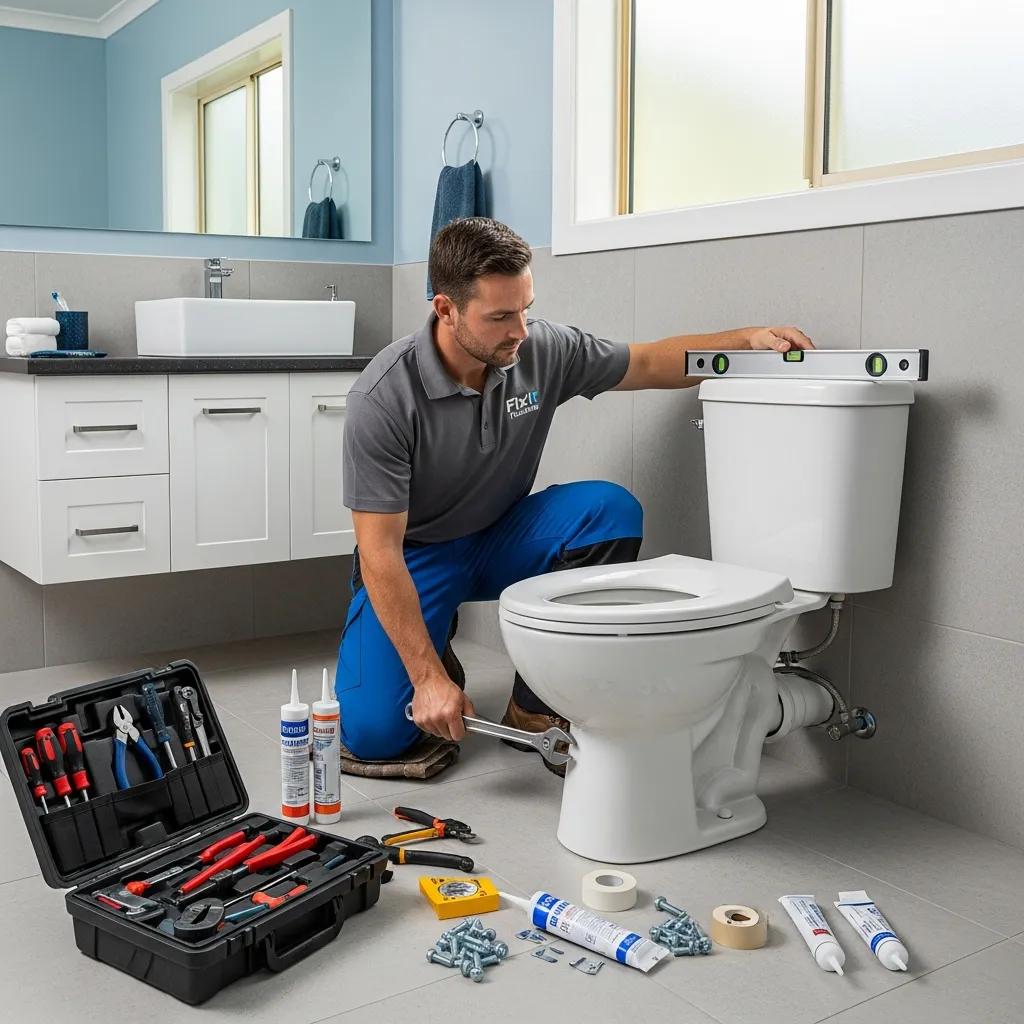
Proper installation is what turns a water-saving toilet into a reliable fixture: seals must seat correctly, trapways need alignment, and valves require calibration so the low and full flushes perform as intended. Frost & Kretsch Plumbing offers local installations and assessments for homeowners and businesses around Grosse Pointe. Our technicians are licensed and insured, provide clear, upfront pricing, and back our work with a 100 percent satisfaction guarantee. Installation starts with an on-site inspection to check flange condition, water supply, and rough-in dimensions, then moves through fixture selection, secure mounting, valve setup, and post-install testing to confirm leak-free operation. Hiring a trained plumber avoids common mistakes that cost water, void warranties, or cause poor flush performance.
- Inspection and Measurements: Verify rough-in, flange condition, and water pressure.
- Fixture Selection and Fit: Match bowl shape and trapway to your plumbing.
- Valve Calibration and Testing: Set liquid and full flush volumes; confirm MaP performance.
This professional process lowers the chance of callbacks and keeps the fixture operating efficiently while protecting the manufacturer’s warranty; the next section explains why expert installation matters.
Why Is Professional Installation Important for Dual Flush Toilets?
Poor installation can lead to ongoing leaks, weak flushes, and warranty headaches that erase any water-saving benefits. Typical problems include improperly seated valves or misadjusted linkages that cause phantom flushes or slow refills, trapway misalignment that hinders waste removal, and incorrectly installed seals that hide leaks. Licensed installers set valve timings, test MaP performance when needed, and confirm code compliance — steps that preserve both efficiency and long-term performance. Hiring a pro also avoids the repeated costs and damage that can come from DIY mistakes.
What Makes Frost & Kretsch Plumbing the Trusted Choice for Installation?
Frost & Kretsch Plumbing is a local provider of residential and commercial plumbing services, including fixture installs with transparent pricing and a focus on customer satisfaction. Our technicians are licensed, insured, and receive ongoing training so they stay current with best practices and product updates. We offer 24/7 emergency service and stand behind our work with a 100 percent satisfaction guarantee — giving Grosse Pointe homeowners confidence when upgrading fixtures. An on-site assessment helps us recommend the right dual-flush options and ensures the installation meets local code and performance expectations.
That mix of local service, licensing, and guarantees makes the upgrade process straightforward and reduces uncertainty for homeowners replacing toilets.
What Dual Flush Toilet Repair and Maintenance Services Are Available?
Dual-flush toilets need the same routine attention as other modern toilets: periodic valve checks, seal replacements, and occasional actuator service to keep them efficient and leak-free. Typical services include diagnosing and stopping leaks, replacing worn seals or dual-flush valve cartridges, adjusting fill valves and float heights, and fixing or replacing actuator assemblies when buttons or levers stick. Regular inspections catch early wear in tank mechanisms and supply connections that can cause continuous running or phantom flushes. Scheduled maintenance prevents small issues from escalating into urgent repairs.
Common repair and maintenance tasks include the following:
- Valve replacement and seal renewal to stop continuous running.
- Actuator service to restore dependable low- and full-flush operation.
- Fill valve adjustment to fix overfilling or slow tank refill.
| Issue | Likely Cause | DIY Check | Professional Fix |
|---|---|---|---|
| Continuous running water | Worn seal or misaligned valve | Add dye to tank; watch for color in bowl | Replace seal or valve cartridge; adjust float |
| Weak or incomplete flush | Partial clog or valve issue | Check trapway and bowl for obstruction | Clear clog; service valve and calibrate flush volume |
| Sticking actuator | Mineral buildup or worn parts | Operate buttons; inspect for resistance | Clean or replace actuator assembly; test cycles |
How Can Leaks and Flush Mechanism Problems Be Identified and Fixed?
You can run a few easy checks before calling for service: put a few drops of food coloring in the tank and check the bowl after 15–30 minutes for dye (a sign of a leak); listen for constant running or a steady hiss, which usually points to a seal problem; and inspect the actuator and linkage for stiffness or mineral buildup. If color appears in the bowl, a worn seal or valve cartridge is likely and usually needs replacement. Persistent running often requires professional valve replacement and calibration. A technician will replace the dual-flush valve cartridge, reseal the tank-to-bowl gasket if needed, clear any trapway obstructions, and tune fill settings to restore dependable operation.
Why Is Regular Maintenance Essential for Dual Flush Toilets?
Routine maintenance keeps small faults from becoming water-wasting failures and preserves the fixture’s rated GPF. Periodic inspections find mineral buildup, worn seals, and loose connections that can cause phantom flushes or hidden leaks — problems that waste water and can damage floors over time. Regular servicing also helps maintain MaP performance and avoids emergency replacements. A modest annual checkup and tune-up typically costs far less than repairing water damage or prematurely replacing a poorly performing toilet.
How to Choose the Best Dual Flush Toilet for Your Home or Business?
Choosing the right dual-flush toilet balances water-efficiency numbers, real-world flush performance, physical fit, and intended use — homeowners prioritize comfort, while commercial installs need durability. Look at GPF ratings for liquid and solid flushes, WaterSense certification for verified savings, MaP score for solids removal ability, bowl shape and trapway size for clog resistance, and construction quality for high-traffic settings. Consider ADA compliance and tankless versus tank designs for public facilities. Start with WaterSense-certified models for assured savings, then use GPF and MaP to confirm a good balance of efficiency and reliable flushing.
When choosing a model, use this checklist to prioritize needs:
- Confirm WaterSense and GPF ratings to guarantee efficiency.
- Check MaP score for expected solids performance.
- Assess bowl shape and trapway for clog resistance and comfort.
- For commercial use, prefer durable, vandal-resistant options.
Below is a concise model comparison to help buyers narrow options based on typical characteristics and uses.
| Product/Model | GPF (liquid/solid) | WaterSense? | Recommended Use |
|---|---|---|---|
| TOTO dual-flush series | ~0.9 / 1.28 | Often available | Residential high-performance |
| Kohler dual-flush options | ~0.8 / 1.28 | Models available | Residential/design-forward installs |
| American Standard / Niagara styles | ~0.8–1.1 / 1.28 | Selected models | Budget to commercial retrofit |
What Are Important Features to Consider, Including WaterSense Certification and GPF Ratings?
WaterSense is the EPA program that certifies toilets meeting performance and efficiency standards, so a WaterSense label means you get verified savings without sacrificing flush quality. GPF tells you how much water a flush uses; dual-flush units list separate values for liquid and solid flushes, and lower numbers equal greater efficiency. MaP scores indicate solids-removal capability under realistic tests — aim for higher MaP scores when choosing lower-volume models. Start with WaterSense certification for guaranteed savings, then use GPF and MaP to confirm the model balances efficiency with trustworthy flushing.
Which Brands and Models Are Recommended for Grosse Pointe Residents?
Trusted brands with dual-flush options include TOTO, Kohler, American Standard, and Niagara. Each offers models across price and performance ranges that fit Grosse Pointe homes and businesses. TOTO typically targets high-performance residential installs, Kohler blends design and function, and American Standard and Niagara provide solid budget and commercial choices. Many manufacturers offer WaterSense-labeled units with strong MaP performance.
For building managers and commercial properties, choose models built for durability and ease of maintenance; for homeowners, prioritize high MaP scores and comfortable bowl designs. If you want model-specific advice and fit checks, schedule a local assessment so we can match a fixture to your rough-in and usage patterns.
How Does Frost & Kretsch Plumbing Support Water Conservation in Grosse Pointe Through Dual Flush Toilet Solutions?
Frost & Kretsch Plumbing helps local conservation by guiding residents and businesses to water-efficient toilets that lower household consumption and ease demand on water and wastewater systems. With on-site assessments, clear pricing, and licensed installations, we make upgrades that deliver measurable water savings across neighborhoods. Our 24/7 emergency availability and satisfaction guarantee also keep installations reliable and prevent wasted water from poorly performing fixtures. When many homes and facilities make the switch, it lowers per-capita water use and reduces pressure on treatment infrastructure — a meaningful community benefit.
What Are the Environmental and Community Benefits of Choosing Water-Efficient Toilets?
Widespread replacement of older toilets with dual-flush and other efficient fixtures cuts total water withdrawal, reduces energy needed for pumping and treatment, and lowers the volume of wastewater a community must process. That reduced load can delay costly infrastructure upgrades, smooth peak demand, and shrink operating emissions tied to treatment plants. Businesses that adopt efficient fixtures also set a local example and encourage wider adoption, helping municipal conservation goals. Together, these changes turn individual savings into measurable regional benefits.
How Can Customers Schedule Installation or Request a Free Estimate?
To schedule an on-site assessment or request a free estimate for dual-flush toilet installation in Grosse Pointe, call (313) 881-2818 to set up a convenient visit. Frost & Kretsch Plumbing will inspect your existing plumbing, recommend suitable models, and provide transparent, upfront pricing. During the call or visit, a technician will confirm rough-in dimensions, discuss WaterSense and MaP priorities, and outline installation steps and guarantees. We serve Grosse Pointe and surrounding areas for residential and commercial projects and offer 24/7 emergency support when needed. That process moves you from evaluation to a reliable, water-saving installation with clear cost expectations.
- Call to schedule: Provide address and basic fixture details.
- On-site assessment: Confirm compatibility and model recommendations.
- Transparent estimate and scheduling: Review fixed pricing and guarantee.
This simple scheduling path helps local property owners turn the guidance in this article into an actionable installation plan.
Frequently Asked Questions
What are the common signs that a dual flush toilet needs repair?
Common signs include continuous running water, weak or incomplete flushes, and a sticking actuator. Continuous running often points to a worn seal or misaligned valve. A weak flush can mean a partial clog or valve problem, while a sticking actuator is usually mineral buildup or worn parts. Regular checks help catch these issues early so you avoid bigger problems and wasted water.
How can I improve the performance of my dual flush toilet?
Make sure the flush valve is correctly calibrated and the tank fills to the proper level. Routine maintenance — checking for leaks, replacing worn seals, and cleaning the actuator — will improve performance. Use the low-volume flush for liquids consistently to maintain efficiency. If problems persist, call a professional plumber for a full inspection and adjustments.
Are dual flush toilets suitable for commercial use?
Yes. Dual-flush toilets work well in commercial settings, especially where water savings matter. Choose models built for durability and easy maintenance, and look for high MaP scores to ensure reliable performance under frequent use. Vandal-resistant options are a good choice for some public facilities.
What should I consider when replacing an old toilet with a dual flush model?
Consider GPF ratings, WaterSense certification, and MaP score when replacing an old toilet. Confirm the new unit fits your existing plumbing and meets your household’s needs. Pay attention to bowl shape and trapway design for clog resistance and comfort. It’s wise to consult a professional plumber to ensure proper installation and code compliance.
How do dual flush toilets contribute to environmental conservation?
Dual-flush toilets reduce water use compared to single-flush models by giving users a lower-volume option for liquid waste. That lowers demand on municipal water supplies and wastewater treatment facilities and reduces the energy needed for pumping and treatment — benefits that add up across a community.
What maintenance tasks are essential for dual flush toilets?
Essential tasks include periodic valve checks, seal replacements, and actuator maintenance. Routine inspections help spot leaks and mineral buildup that can affect performance. Adjusting fill valves and float height as needed keeps tank levels correct. Regular maintenance prevents small problems from becoming costly repairs and helps maintain efficiency.
Can I install a dual flush toilet myself, or should I hire a professional?
Some homeowners can handle installation, but hiring a professional is recommended. A licensed plumber ensures the job meets performance expectations — proper sealing, alignment, and valve calibration — and avoids common installation pitfalls that cause leaks or poor flushing. Professionals also ensure compliance with local plumbing codes for long-term peace of mind.
Conclusion
Switching to dual-flush toilets is a practical way to cut water use, lower utility bills, and improve bathroom performance — a smart move for homeowners and businesses alike. Pick a model that balances WaterSense certification, strong MaP scores, and the right fit for your plumbing, and rely on a licensed installer to get the most from your investment. Ready to explore options? Contact Frost & Kretsch Plumbing for expert installation and personalized recommendations for your Grosse Pointe home or business.